Program Approach
Structured health programs that turn data into action
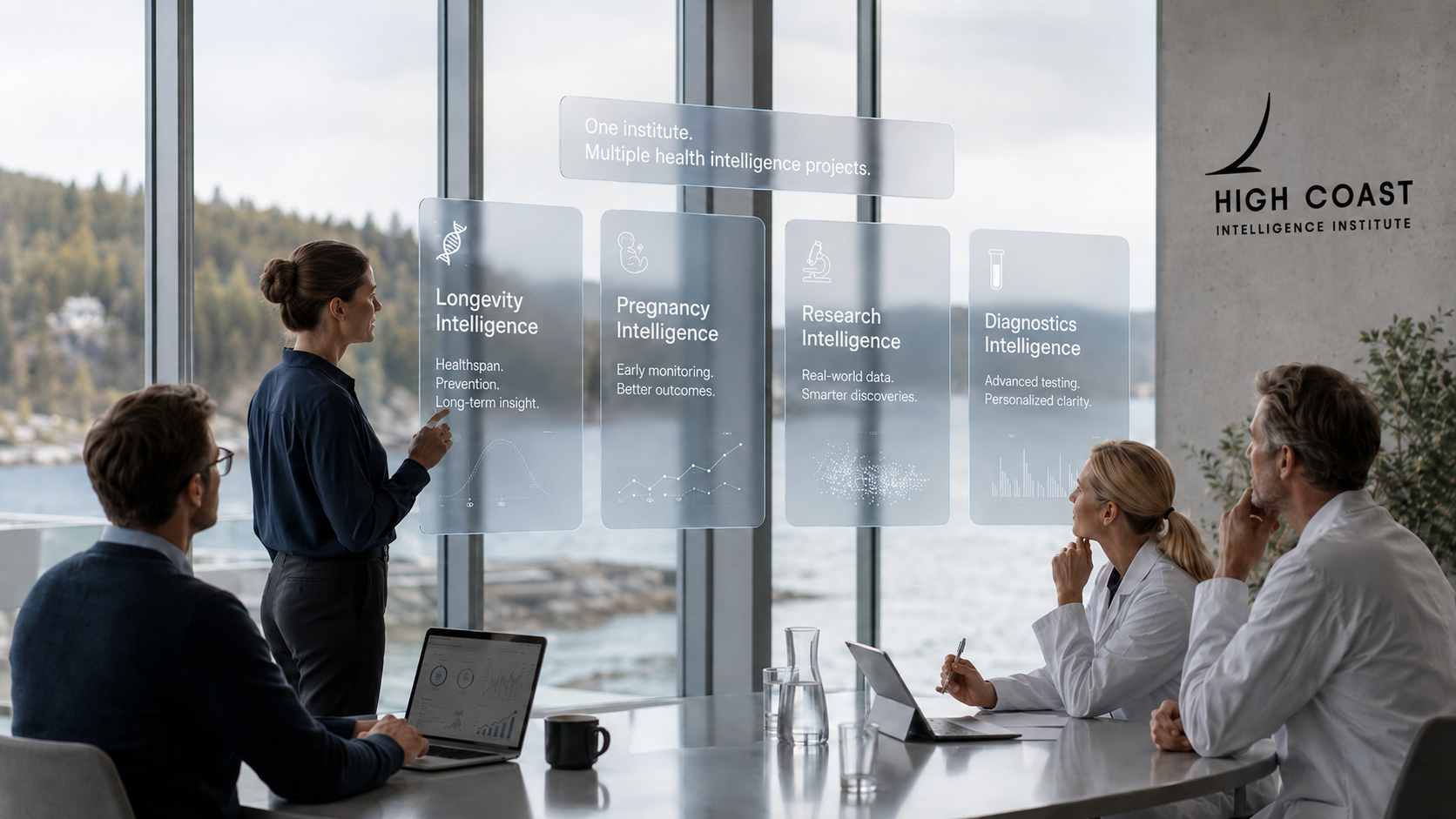
Program Approach describes how High Coast Health Intelligence Institute builds health programs.
The Institute does not treat diagnostics, AI, research, clinical knowledge or health advice as separate pieces.
A program is where these pieces are connected into a structured pathway.
The purpose is simple:
health data should lead to better decisions.
A person should not be left with isolated test results, unclear recommendations or disconnected follow-up.
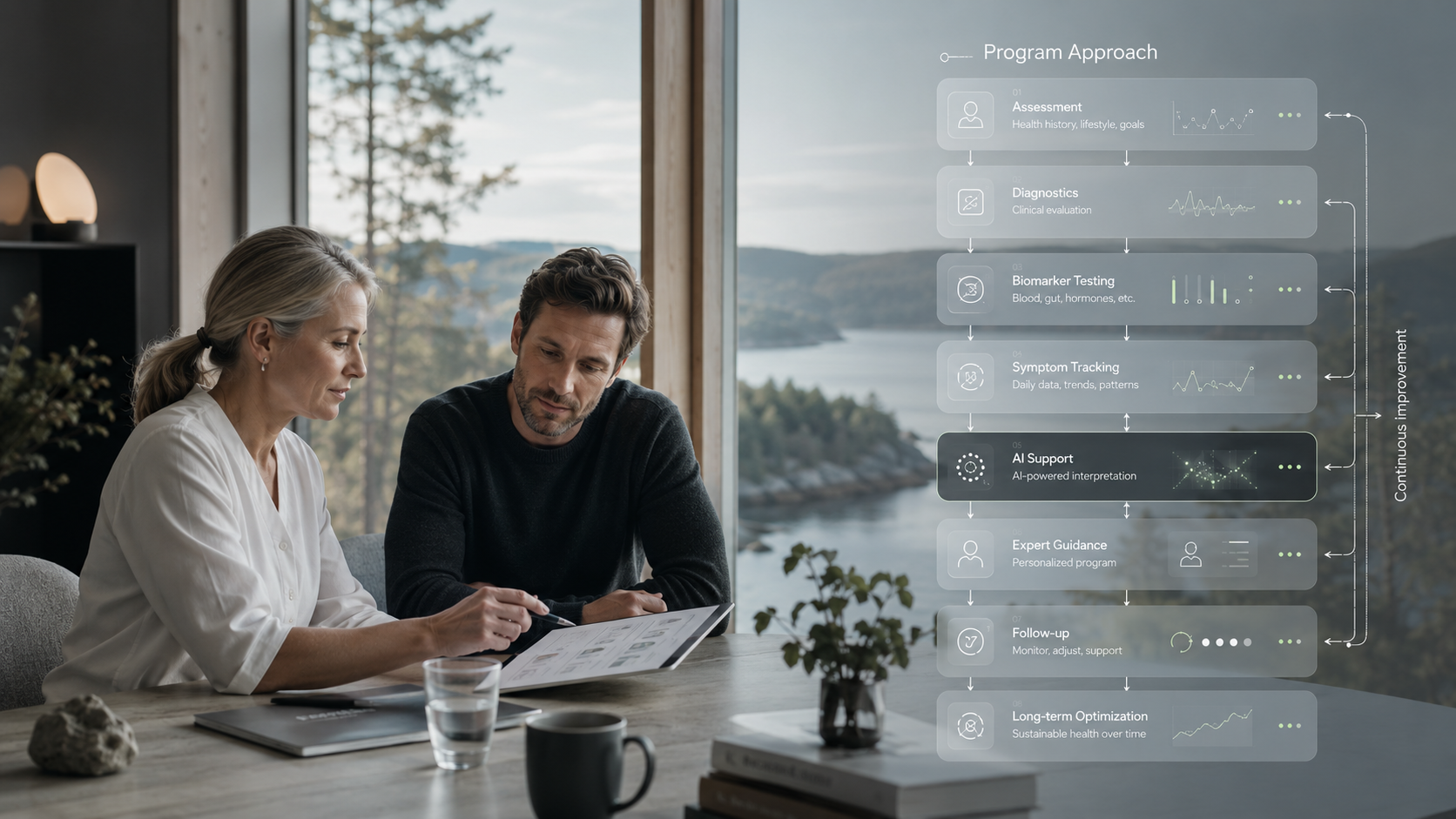
A structured health program helps move from human need to measurement, from measurement to interpretation, from interpretation to action, and from action to follow-up.
This is how health intelligence becomes practical.
Why structured programs matter
Many health services happen as isolated events.
A test is taken.
A result is delivered.
A consultation happens.
A recommendation is given.
But many health questions require more structure than that.
Longevity, prevention, pregnancy monitoring, recovery, metabolic health, lifestyle change and long-term optimization all depend on what happens over time.
A single event can be useful.
A structured program can create continuity.
It can help answer:
What is the goal?
What should be measured?
What does the result mean?
What should happen next?
What should be followed?
When should the plan change?
What can be learned over time?
This is why programs are central to High Coast Health Intelligence Institute.
Structured health programs
A structured health program is not just a package of services.
It is a pathway.
It defines the steps between a health need and a health decision.
A program may include:
initial assessment
diagnostics and biomarker testing
symptom or lifestyle tracking
AI-supported interpretation
expert review
personalized guidance
follow-up testing
progress monitoring
research learning
program adjustment over time
The exact structure depends on the health area.
A pregnancy monitoring program is different from a longevity program.
A preventive diagnostics program is different from a recovery and performance pathway.
But the logic is the same:
create a clear pathway from data to action.
Personalized and measurable
A program should be personal enough to be relevant and structured enough to be measurable.
If a program is too generic, it may not respond to the person’s actual needs.
If it is too unstructured, it becomes difficult to follow, evaluate or improve.
High Coast Health Intelligence Institute aims to build programs that combine:
personal history
individual goals
biomarkers
symptoms
lifestyle context
risk factors
AI-supported structure
human expertise
clear follow-up
This makes it possible to support the individual while also learning how the program can improve.
Personalization should not mean randomness.
It should mean structured relevance.
From data to experience
Health data becomes more meaningful when it is connected to lived experience.
A lab value may show a biological signal.
A wearable may show sleep or recovery.
A symptom report may show how the person feels.
A consultation may add context.
A follow-up test may show whether something changed.
A program brings these pieces together.
The person should not only receive information.
They should experience a clearer pathway.
They should understand what is being measured, why it matters, what the interpretation suggests and what the next step is.
This is the difference between data and health intelligence.
Science meets environment
High Coast Health Intelligence Institute is built in the High Coast region of Sweden.
The environment is part of the broader program context.
Nature, space, seasonality, recovery and a low-noise setting can support reflection, behavior change, long-term thinking and program experience.
But environment does not replace science.
The Institute’s program approach combines environment with:
diagnostics
data
AI-supported interpretation
expert guidance
structured routines
follow-up
research learning
Some programs may be digital.
Some may be clinic-based.
Some may be partner-delivered.
Some may include short or extended stays in the High Coast.
The environment gives the Institute a physical base and experiential dimension, while the program model remains scalable and distributed.
Long-term optimization
Many meaningful health improvements require time.
Inflammation, metabolic health, cardiovascular risk, hormonal balance, nutritional status, recovery, sleep, fitness and long-term resilience are rarely changed through one action alone.
Long-term optimization means working with repeated measurement, structured feedback and realistic adjustment.
A program should help answer:
What is the baseline?
What are the priorities?
What actions are reasonable?
What should be followed?
What has improved?
What has not changed?
What should be adjusted?
This approach is especially important in Longevity Intelligence, but it also applies across the Institute’s wider health intelligence model.
Program approach in Longevity Intelligence
In Longevity Intelligence, the program approach focuses on healthspan, prevention and long-term biological understanding.
A longevity program may include diagnostics, biological risk factor analysis, lifestyle priorities, recovery planning, nutritional guidance, expert review and follow-up over time.
The goal is not generic longevity advice.
The goal is to help people understand their biological priorities and build structured strategies for longer, healthier function.
A longevity program should move from interest to assessment, from assessment to priorities, and from priorities to measurable follow-up.
Program approach in Pregnancy Intelligence
In Pregnancy Intelligence, the program approach is more time-sensitive and emotionally sensitive.
Early pregnancy monitoring may include blood tests, symptom tracking, trend analysis, trigger-event response, AI-supported interpretation and human expertise when needed.
The goal is not to replace maternity care, emergency care or clinical responsibility.
The goal is to create more structure during a period where many women want closer follow-up.
Pregnancy programs must be careful, clear and responsible.
They should support better understanding without creating false certainty.
Program approach in Diagnostics Intelligence
In Diagnostics Intelligence, the program approach focuses on making testing more useful.
A preventive diagnostics program should not only deliver lab values.
It should help explain what the results mean, what patterns are visible, what should be prioritized and what follow-up may be useful.
Diagnostics become more valuable when they are connected to interpretation, guidance and action.
A program format allows diagnostics to become part of a pathway rather than a one-time report.
Program approach in Research Intelligence
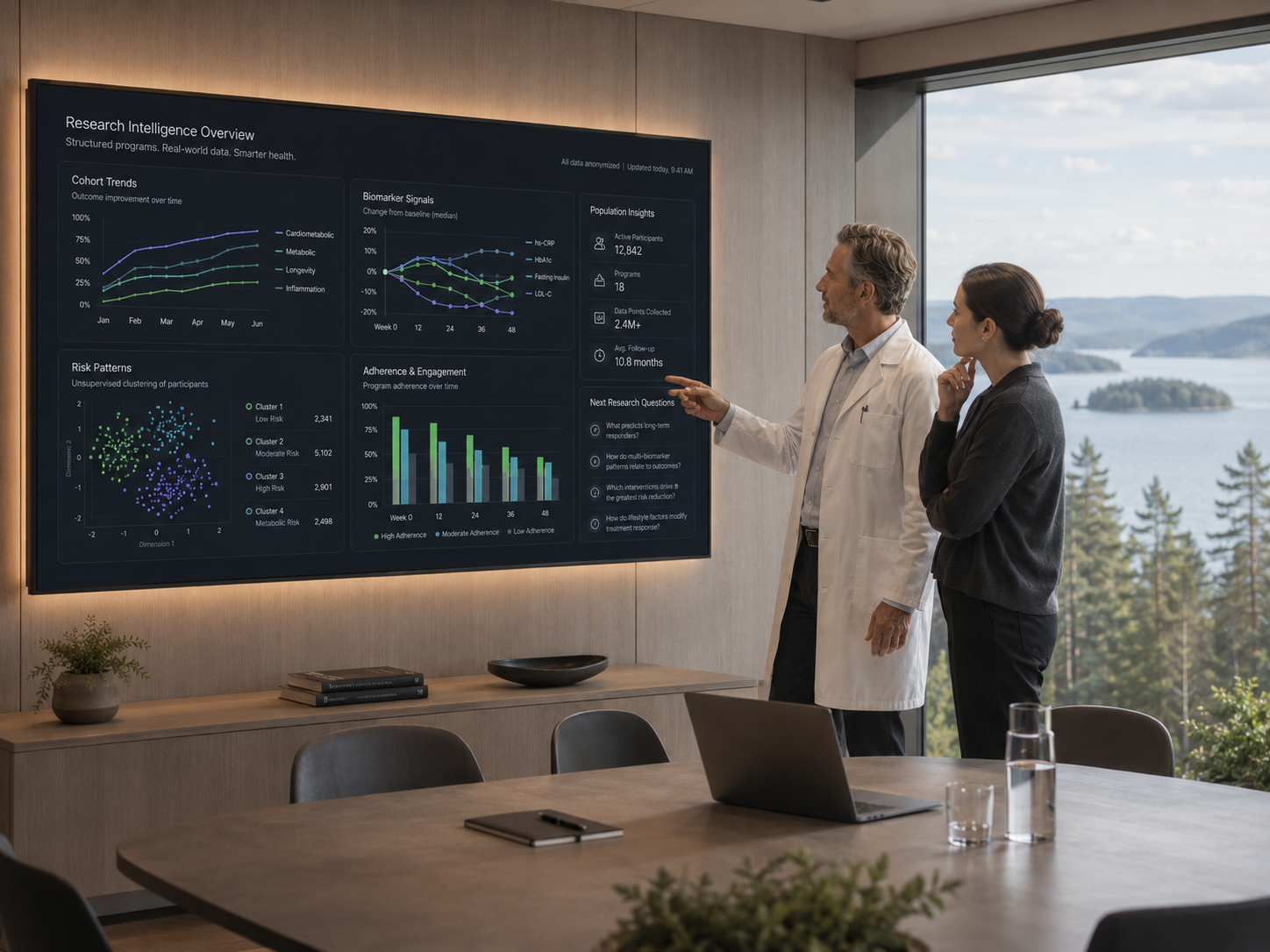
In Research Intelligence, programs become learning systems.
When diagnostics, symptoms, actions and outcomes are followed responsibly, programs can generate new knowledge.
This can help improve:
monitoring pathways
biomarker panels
AI-supported interpretation
decision support models
program design
new product development
Research Intelligence ensures that programs do not only support the individual today.
They also help the Institute learn how to build better health intelligence over time.
Digital, physical and partner-delivered formats
The Institute’s program approach can work through several formats.
Digital programs can support monitoring, tracking, interpretation and follow-up over distance.
Clinic-based programs can connect diagnostics, consultation and expert review.
Short or extended stays can combine diagnostics, education, recovery and environment.
Retreat-based programs can turn health intelligence into a lived experience.
Partner-delivered programs can expand reach through clinicians, laboratories, hospitality partners, researchers and technology providers.
The format may vary.
The structure should remain clear.
Human expertise at the center
Programs should not be fully automated.
AI can help structure information, detect patterns and support interpretation.
But health decisions require human context, responsibility and judgment.
Human expertise may include clinicians, researchers, laboratory specialists, data scientists, program leaders, nutrition experts, recovery specialists, psychologists, midwives, physicians or other relevant professionals depending on the program.
The Institute’s role is to connect data and expertise into a useful pathway.
Technology should support the human process.
It should not replace it.
Follow-up as a core principle
Follow-up is not an optional add-on.
It is part of the program model.
Without follow-up, it is difficult to know whether a recommendation worked, whether a pattern changed, whether a risk improved or whether the plan needs adjustment.
Follow-up helps the person understand progress.
It helps experts make better decisions.
It helps the Institute build better models.
This is why structured programs should include a clear follow-up logic from the beginning.
The core idea
Program Approach is about turning health intelligence into practical pathways.
High Coast Health Intelligence Institute builds programs that are structured, personalized, measurable and connected to follow-up.
The goal is not more data.
The goal is useful guidance.
The goal is not isolated health events.
The goal is continuity.
Structured programs help turn diagnostics, AI, expert knowledge and real-world data into action — and action into learning.