Advanced Diagnostics
Emerging tools for deeper health assessment
Advanced Diagnostics is a development area within the Diagnostics & Data platform at High Coast Health Intelligence Institute.
It focuses on diagnostic tools that can provide deeper insight into biological systems, risk patterns, body composition, genetics, biological age, imaging, AI-supported integration and emerging longevity technologies.
The purpose is not to use advanced diagnostics for its own sake.
Advanced does not automatically mean useful.
A diagnostic tool becomes valuable when it helps answer a meaningful health question, supports better interpretation, guides action or improves follow-up over time.
Advanced Diagnostics is therefore approached carefully.
The goal is deeper assessment when it matters — not more complexity without purpose.
Why advanced diagnostics matter
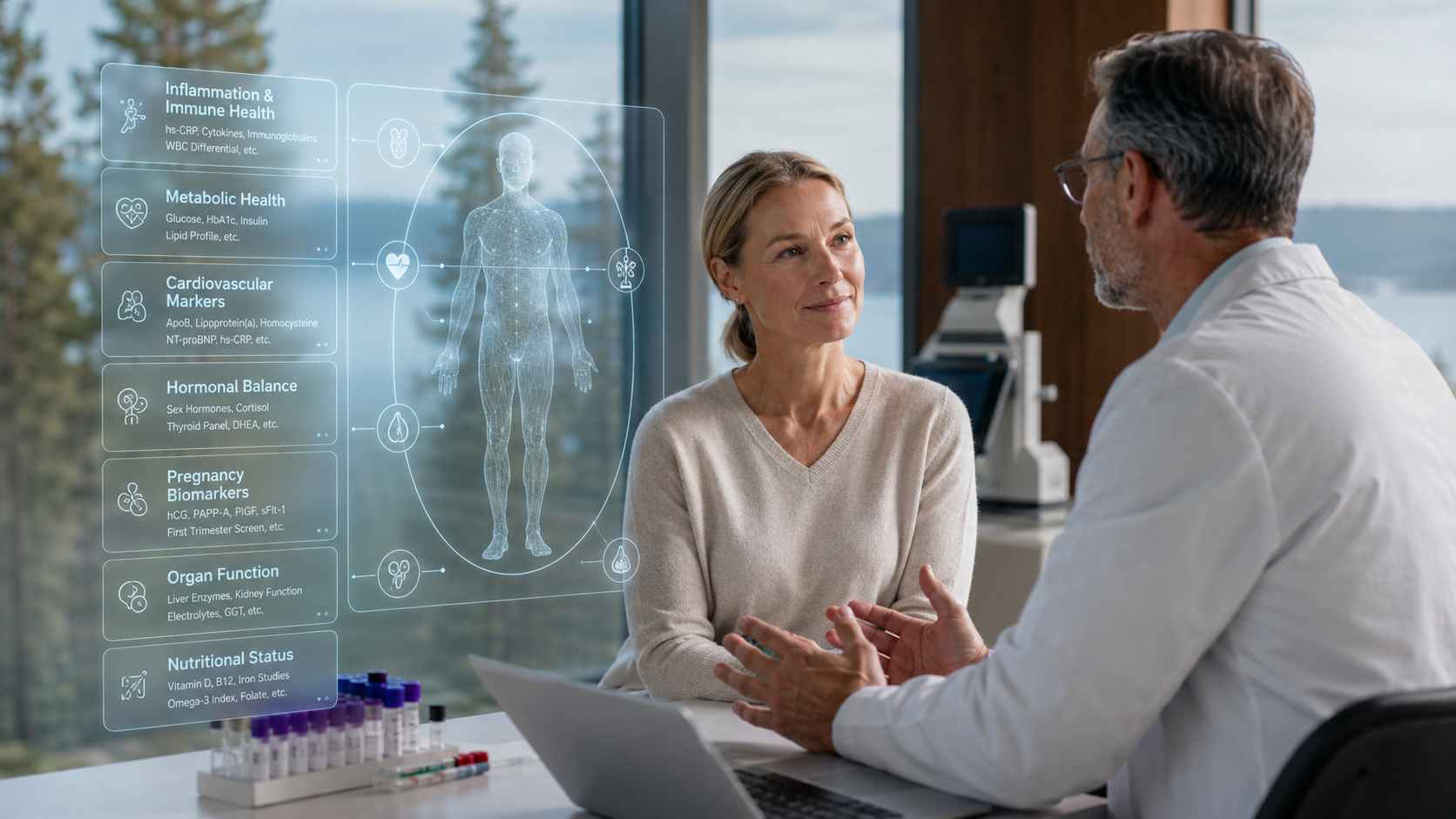
Some health questions cannot be answered fully by standard blood tests alone.
A biomarker panel can show important biological signals, but it may not show body composition, tissue structure, vascular condition, genetic predisposition, functional capacity or deeper longitudinal patterns.
Advanced diagnostics may help create a more complete picture.
They can support questions such as:
What biological systems need closer assessment?
Is there a deeper risk pattern behind the available data?
Does body composition explain part of the metabolic profile?
Are genetic or biological age indicators useful in this case?
Can imaging add relevant context?
Can AI help integrate multiple data sources?
Which findings should guide follow-up?
The Institute’s approach is to integrate advanced diagnostics only when they add real value.
Imaging and body composition
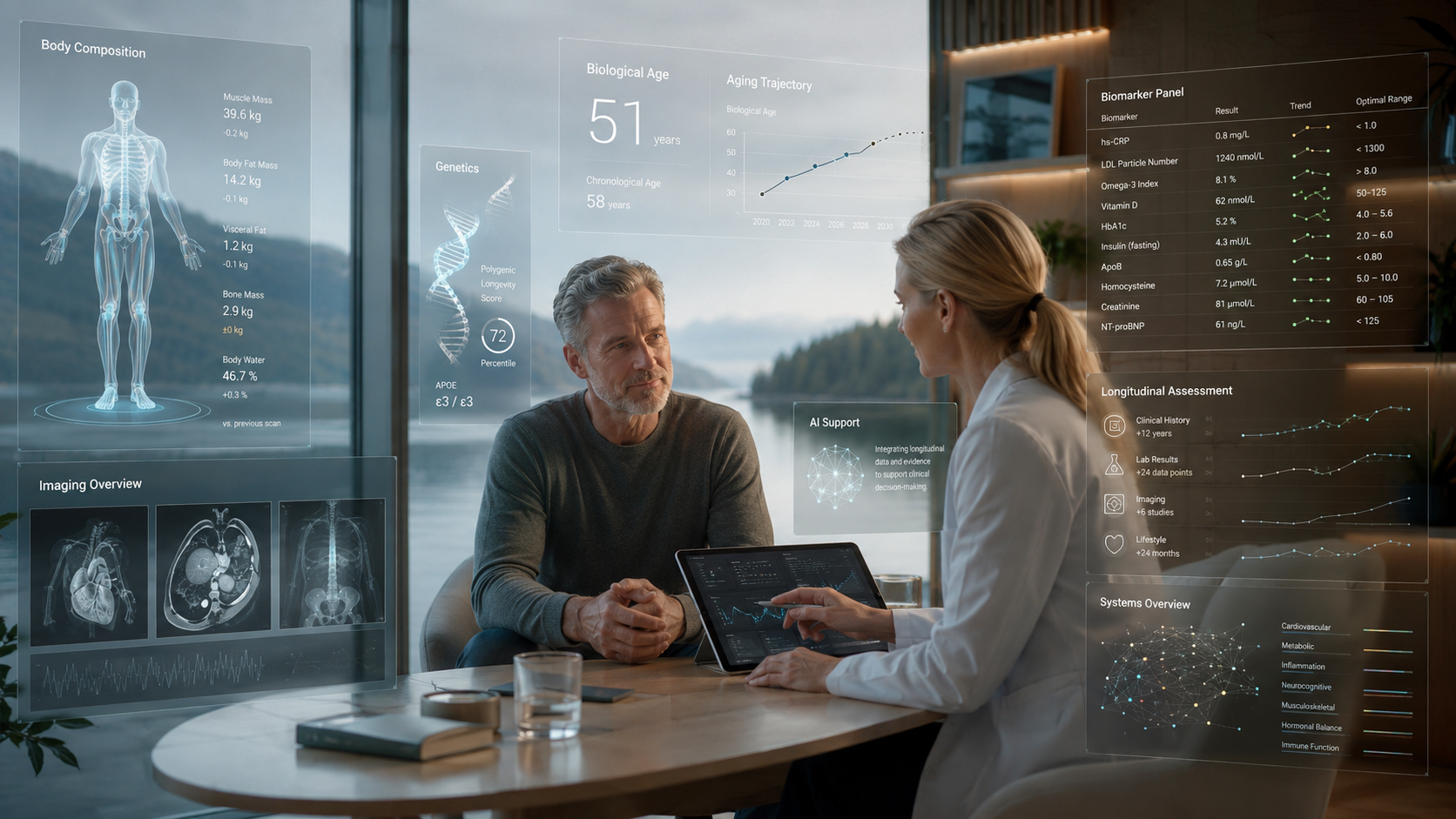
Imaging and body composition tools can provide information that standard lab testing cannot show.
Body composition can be relevant for metabolic health, cardiovascular risk, inflammation, recovery, performance and longevity.
Depending on the setting and partners, assessment may include areas such as:
muscle mass
fat mass
visceral fat
bone health
body composition trends
organ-related imaging
vascular or structural imaging
functional assessment
The purpose is not to reduce health to a body scan.
The purpose is to understand how structure and biology interact.
For example, two people may have similar blood values but very different body composition, muscle mass or metabolic risk.
Advanced assessment can help make prevention more precise.
Genetics and biological age
Genetics and biological age are important but complex areas.
Genetic information can help identify predispositions, risk patterns or individual differences in biological response.
Biological age tools attempt to estimate how biological systems appear to be aging compared with chronological age.
These tools can be interesting in longevity and prevention, but they must be interpreted carefully.
They should not be treated as absolute truth.
A biological age estimate may raise useful questions, but it should not replace clinical judgment, biomarker interpretation, lifestyle context or follow-up.
The Institute’s approach is to use genetics and biological age as possible layers of insight — not as standalone answers.
AI and data integration
Advanced Diagnostics depends heavily on data integration.
When multiple diagnostic layers are combined, interpretation becomes more complex.
A person may have:
blood biomarkers
body composition data
wearable data
symptom reports
medical history
genetic information
biological age estimates
imaging results
program follow-up
outcome data
AI can help organize these data layers, identify patterns, summarize trends and support interpretation.
This is one of the most important roles of AI in advanced diagnostics.
The goal is not automated decision-making.
The goal is structured decision support.
AI can help prepare the information.
Human expertise remains essential for interpretation, prioritization and responsibility.
Partner diagnostic network
High Coast Health Intelligence Institute is built as a distributed model.
This means advanced diagnostics may be developed together with partner laboratories, imaging providers, technology companies, healthcare providers, research groups and product developers.
A partner diagnostic network can support access to tools that are not all located in one place.
This may include:
specialized laboratory testing
imaging and body composition assessment
genetics providers
biological age testing platforms
wearable and sensor companies
AI and data integration partners
clinical interpretation partners
research collaborators
The Institute’s role is to connect these capabilities into structured health intelligence pathways.
The value is not only the test.
The value is the system around the test.
Frontier longevity technologies
Longevity is one of the areas where advanced diagnostics are developing quickly.
New tools are emerging around biological age, cellular health, epigenetics, mitochondrial function, inflammation, senescence, proteomics, metabolomics, microbiome analysis and other deeper biological layers.
Some of these tools may become highly valuable.
Some may remain experimental.
Some may be useful for research before they are useful for individual decisions.
The Institute’s approach should be careful, curious and responsible.
Frontier technologies should be evaluated by asking:
Is the measurement reliable?
Is it clinically or biologically meaningful?
Does it add value beyond existing diagnostics?
Can it guide action?
Can it be followed over time?
Is it ready for individual use or mainly research?
What are the limitations?
This protects the Institute from hype while keeping the door open to serious innovation.
Advanced diagnostics in Longevity Intelligence
In Longevity Intelligence, advanced diagnostics may help deepen understanding of healthspan, biological risk and long-term function.
Relevant areas may include:
body composition
biological age
cardiovascular risk assessment
metabolic risk profiling
inflammation patterns
recovery and performance data
genetic predisposition
deeper biomarker panels
AI-supported longitudinal interpretation
The goal is not to create a complicated longevity report.
The goal is to identify which systems matter most and what should be followed or improved.
Advanced diagnostics should make longevity more actionable, not more confusing.
Advanced diagnostics in Pregnancy Intelligence
Pregnancy Intelligence requires a different level of caution.
Early pregnancy monitoring is sensitive, and not every advanced tool is appropriate.
The core focus remains structured blood testing, symptom tracking, timing, trigger-event response and expert interpretation.
However, advanced diagnostics may support pregnancy-related work in selected areas, especially through research, partner collaboration or carefully defined pathways.
This may include more structured biomarker interpretation, risk pattern research, ultrasound-related integration through healthcare partners, or AI-supported monitoring models.
The principle is clear:
advanced tools must never create false reassurance or replace appropriate maternity or emergency care.
They should only support clearer structure and safer decision-making.
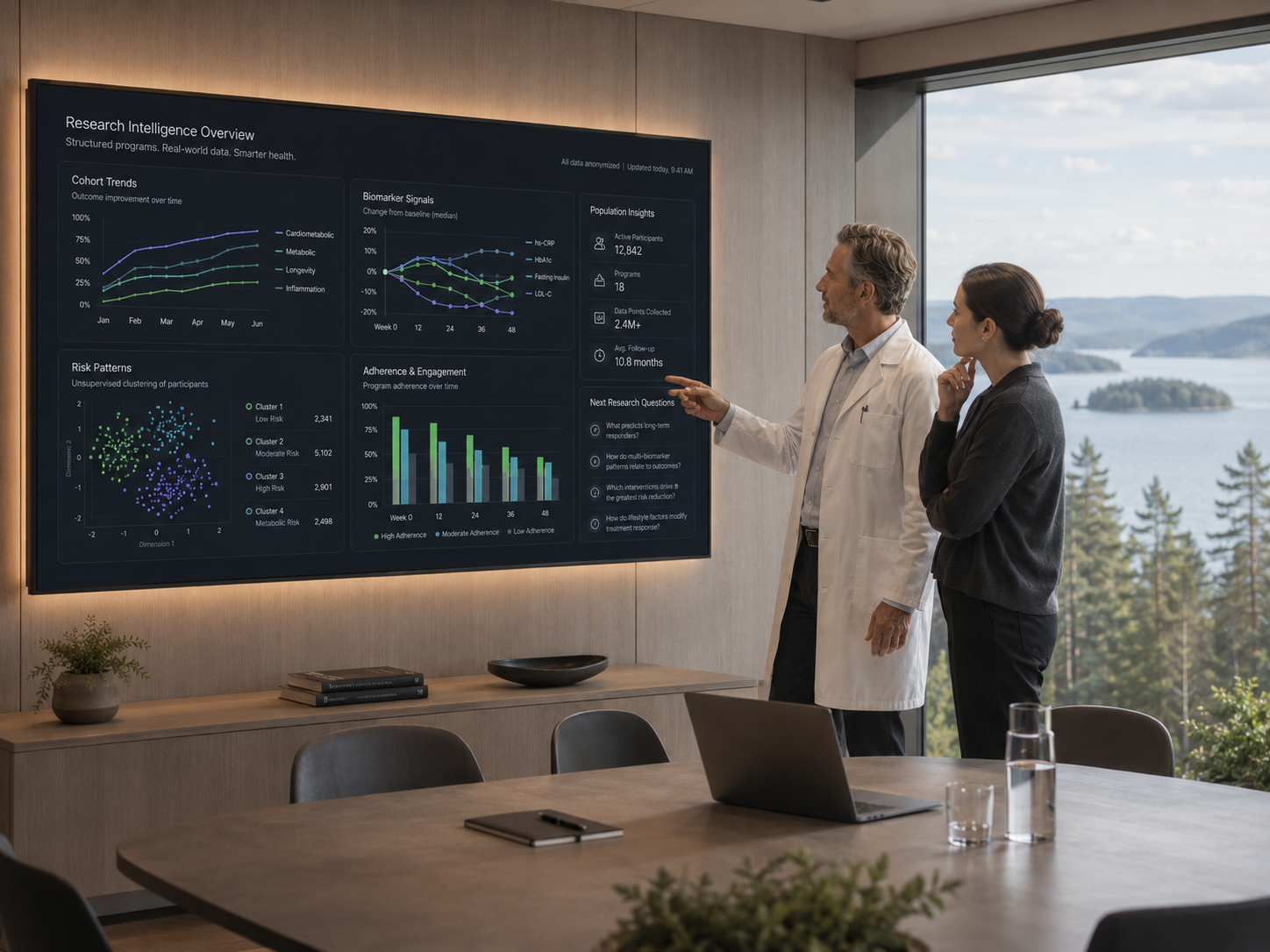
Advanced diagnostics in Research Intelligence
Research Intelligence is a natural home for many advanced diagnostic tools.
Some tools are not ready to guide individual decisions but may be valuable for research and model development.
Advanced diagnostics can help generate new questions:
Which deeper signals predict outcomes?
Which data layers improve interpretation?
Which markers are useful only in combination?
Which technologies are reliable enough for programs?
Which tools should become future products?
Research Intelligence can help evaluate advanced diagnostics before they are integrated more broadly.
This is how the Institute can remain innovative while staying responsible.
Avoiding overdiagnosis and noise
Advanced diagnostics can create value, but they can also create noise.
More detailed testing may reveal more variation, but not all variation is meaningful.
Unclear results can create anxiety, unnecessary follow-up or false precision.
That is why the Institute must use advanced diagnostics with discipline.
Each tool should be connected to a clear question.
Each result should be interpreted in context.
Each finding should be linked to a possible decision or follow-up pathway.
The goal is not maximum measurement.
The goal is meaningful measurement.
Quality and validation
Advanced diagnostics require strong quality standards.
Before a tool becomes part of a health intelligence pathway, it should be evaluated for:
reliability
validity
clinical relevance
data quality
interpretability
actionability
privacy and ethics
partner quality
follow-up value
A technology may look impressive, but still be weak in real-world use.
The Institute’s responsibility is to distinguish promising tools from tools that are not yet useful enough.
From deeper assessment to better decisions
Advanced Diagnostics should always connect back to decisions.
A deeper test should help clarify:
what matters
what should be followed
what is stable
what is changing
what may need expert review
what action may be reasonable
what can be learned over time
Without this connection, advanced diagnostics risk becoming isolated complexity.
With the right structure, they can strengthen health intelligence.
The core idea
Advanced Diagnostics explores deeper tools for understanding health.
Imaging and body composition.
Genetics and biological age.
AI and data integration.
Partner diagnostic networks.
Frontier longevity technologies.
These tools can become valuable when they are reliable, relevant, interpreted in context and connected to action.
High Coast Health Intelligence Institute uses advanced diagnostics carefully — not to create more noise, but to support deeper understanding and better health decisions.