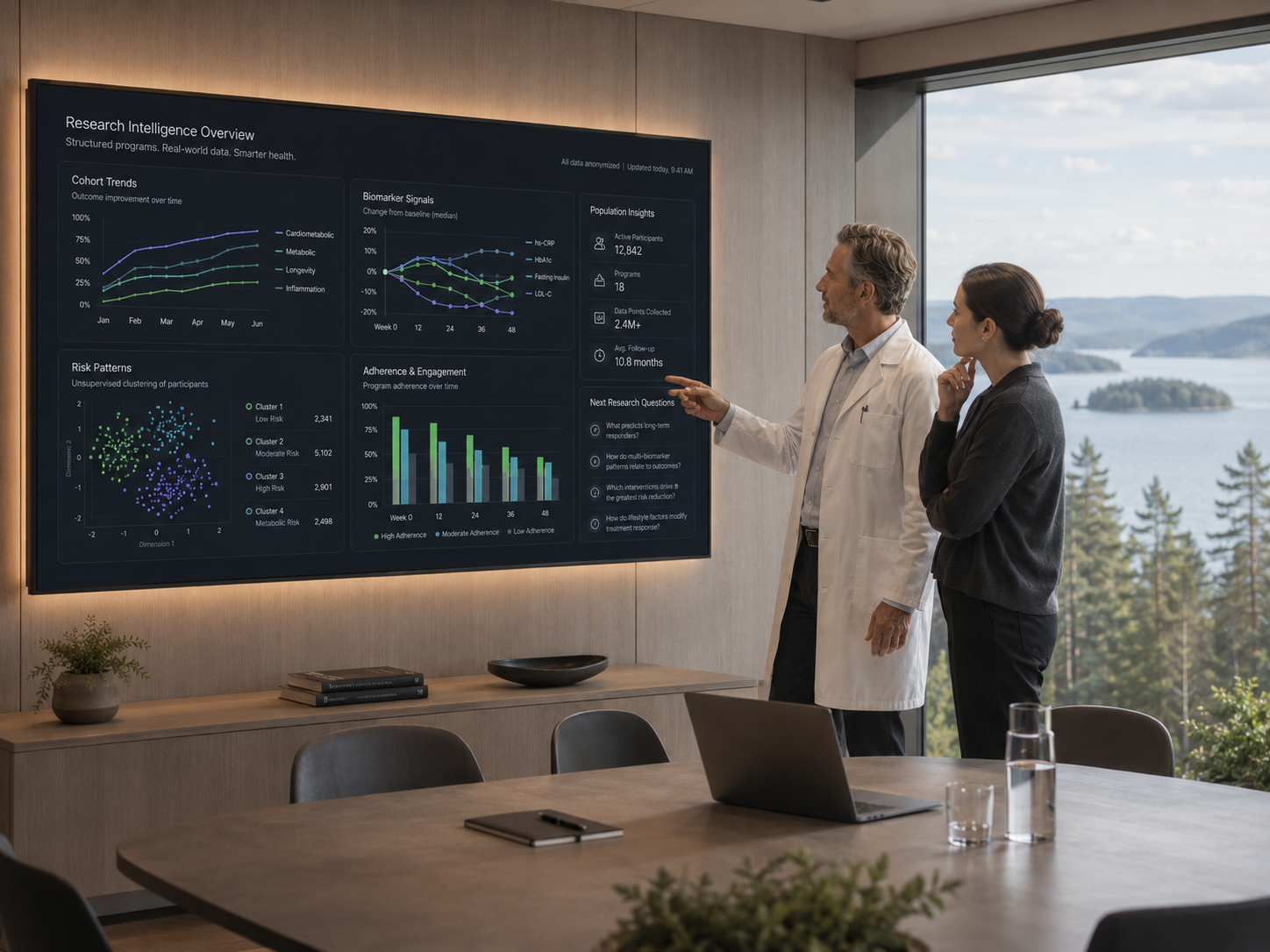

Research Intelligense at High Coast
Evidence, applied models and open questions in women’s health intelligence.
Research is a central part of High Coast Women’s Health Intelligence.
Our purpose is to connect diagnostics, symptoms, life-stage data, clinical knowledge and scientific literature into structured understanding. We use research not only to explain what is already known, but also to identify what remains unclear, what needs better models and what could become useful health intelligence in the future.
We believe women’s health should be developed through evidence, responsible data use, applied research and transparent interpretation.
When something is established, we say so.
When something is a hypothesis, model or open question, we say so.
Research Areas
Core scientific domains guiding our health intelligence framework
Our research areas reflect the major biological systems and life stages that shape women’s health over time.
We focus on areas where diagnostics, symptoms, prevention and long-term follow-up can create better understanding.
Core research areas include:
- pregnancy intelligence
- hormone health
- fertility and IVF
- endometriosis and inflammation
- menopause and postmenopause
- women’s longevity
- metabolic health
- immune and inflammatory signaling
- biomarker interpretation
- AI-supported clinical interpretation
These areas are connected. Hormones influence fertility, pregnancy, metabolism, inflammation, skin, mood, sleep and long-term disease risk. Pregnancy history may provide important signals about future cardiovascular or metabolic health. Menopause changes long-term prevention needs. Longevity begins before old age.
Our research framework is designed to study these connections rather than treating each topic as isolated.
Evidence Insights
Research-based articles translating complex findings into structured understanding
Evidence Insights are our research-based articles and educational explainers.
They are designed to make complex women’s health topics easier to understand without oversimplifying the science.
Evidence Insight topics may include:
- pregnancy hematoma and ultrasound monitoring
- endometriosis, inflammation and pregnancy
- progesterone biology and immune modulation
- bleeding episodes during pregnancy
- fertility biomarkers and ovarian reserve
- perimenopause and hormonal transition
- postmenopause and cardiovascular risk
- women’s longevity and biological age
- mitochondrial function and metabolic resilience
- skin aging, oxidative stress and inflammation
Each Evidence Insight should separate:
- established clinical knowledge
- interpretation based on available evidence
- plausible mechanisms
- research hypotheses
- open questions
This is important for trust. Women’s health information should be useful, but also honest about uncertainty.
Applied Research
Developing models, visual explanations and hypotheses for future investigation
Applied research is where we translate health questions into models, visual explanations, structured frameworks and future research concepts.
This includes educational graphics, monitoring concepts, biomarker models, risk pattern analysis and AI-supported interpretation systems.
Applied research may include:
- visual models of pregnancy hematoma formation and clearance
- structured pregnancy monitoring concepts
- hormone pattern interpretation models
- menopause risk and prevention frameworks
- biomarker trend analysis
- trigger-event detection
- symptom and laboratory correlation
- AI-supported decision support concepts
- real-world data learning systems
Some applied research models are not yet proven clinical mechanisms. They may be used to support discussion, hypothesis generation and future investigation.
We clearly label them as proposed models when they are not fully validated.
Pregnancy Intelligence Research
Pregnancy Intelligence is one of our most important applied research areas.
It focuses on how pregnancy-related data can be monitored, interpreted and explained more clearly.
Research themes include:
- pregnancy monitoring
- blood tests and symptom tracking
- IVF and previous miscarriage support
- bleeding and hematoma monitoring
- placenta and inflammation
- endometriosis and pregnancy risk
- ultrasound-related educational models
- AI-supported interpretation of pregnancy trends
Pregnancy is an area where uncertainty can create major stress. Our goal is to develop educational and monitoring frameworks that help structure information without overstating what is known.
The long-term direction is to support safer, clearer and more informed pregnancy follow-up.
Women’s Health Data and Ethics
Research in women’s health must be built responsibly.
Health data is sensitive. Pregnancy data, fertility history, hormone status, laboratory results and symptom patterns must be handled with strong privacy principles, consent-based use and clear boundaries.
Our research principles include:
- consent-based data use
- privacy and anonymization
- responsible AI
- clinical safety
- transparent evidence levels
- clear distinction between education and medical diagnosis
- research governance
- avoidance of exaggerated claims
The goal is to build useful health intelligence without compromising trust.
Model Development
Women’s health research should lead to better models.
We are interested in models that can help identify patterns over time, support risk stratification, detect trigger events and improve interpretation of complex health data.
Model development areas include:
- prediction models
- risk stratification
- trend analysis
- trigger-event detection
- decision support systems
- symptom-biomarker correlation
- longitudinal health tracking
- AI-assisted interpretation
These models should support clinical reasoning and health decisions. They should not replace clinicians or create false certainty.
Publications and Science
High Coast Women’s Health Intelligence will develop a growing research and publication library.
This may include:
- articles
- white papers
- research notes
- visual explainers
- scientific collaborations
- open questions
- applied research summaries
- evidence reviews
Our publication goal is to build a serious women’s health knowledge base that is useful for patients, clinicians, researchers and partners.
Key Message
Research is not separate from women’s health practice.
It is how we improve interpretation, identify patterns, build better programs and ask better questions.
High Coast Women’s Health Intelligence uses research to connect diagnostics, symptoms, biology, prevention and real-world data into more structured women’s health understanding.