
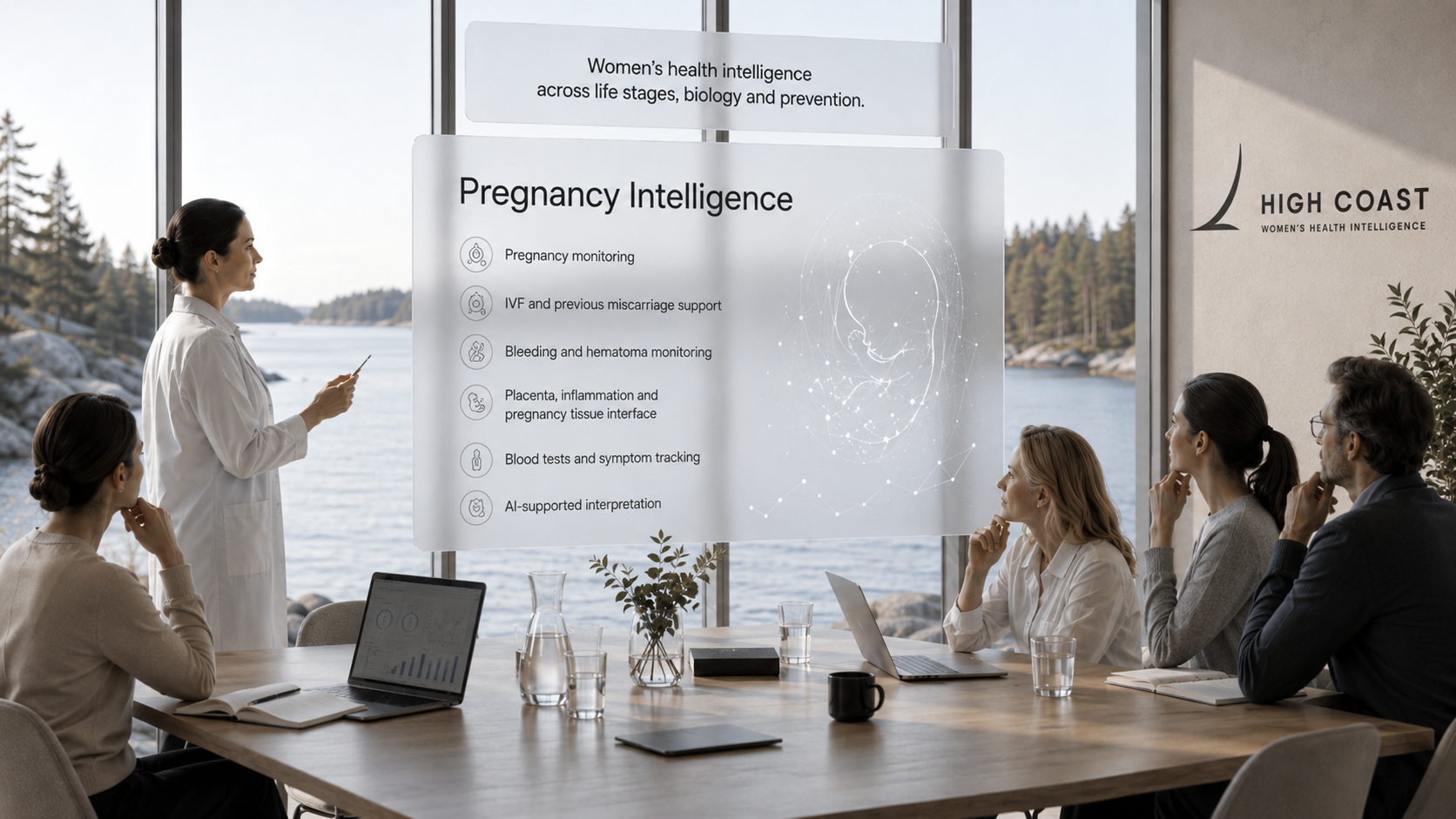
Pregnancy Intelligence
Pregnancy is not a static condition. It is a dynamic biological process that changes from week to week.
Hormones rise. The placenta develops. Blood volume expands. Immune regulation changes. The uterus grows. Symptoms evolve. Bleeding episodes may occur. Laboratory values may shift. Ultrasound findings appear in stages. Maternal health and fetal development become increasingly connected.
High Coast Women’s Health Intelligence approaches pregnancy as a time-sensitive health intelligence pathway.
The purpose is not to replace maternity care, emergency assessment or specialist obstetrics. The purpose is to help organize pregnancy-related information, interpret signals in context and support clearer decisions about what should be monitored, what may be reassuring and what needs clinical review.
Pregnancy intelligence is especially relevant when pregnancy history, IVF background, bleeding episodes, previous miscarriage, endometriosis, maternal risk factors or anxiety after previous loss make standard information feel insufficient.
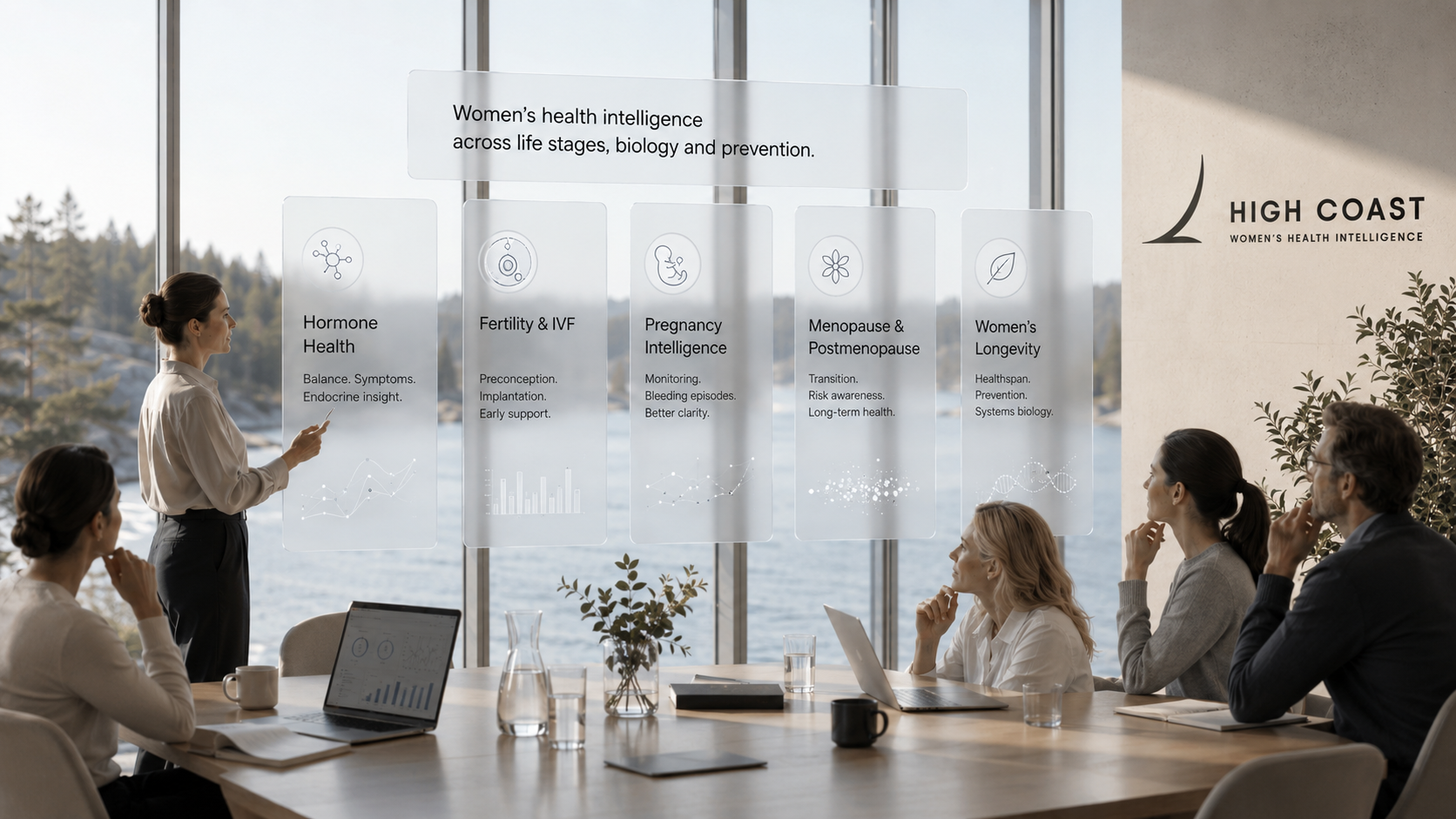
Pregnancy monitoring
Pregnancy monitoring involves more than confirming that a pregnancy exists.
In early pregnancy, monitoring may include pregnancy test progression, hCG trends where clinically relevant, progesterone context, bleeding symptoms, pain, ultrasound timing and previous reproductive history.
Later in pregnancy, monitoring may involve blood pressure, blood tests, fetal growth, placental position, maternal symptoms, glucose regulation, iron status, inflammation context and clinical risk factors.
A structured pregnancy monitoring framework asks:
What week of pregnancy is this?
What symptom or result is being interpreted?
Is this expected, uncertain or concerning?
Has this changed over time?
Does this require repeat testing, reassurance, scheduled follow-up or urgent clinical assessment?
The goal is not to monitor everything excessively. The goal is to make pregnancy signals easier to understand and safer to act on.
IVF and previous miscarriage support
Pregnancy after IVF or previous miscarriage can be medically and emotionally different from an uncomplicated first pregnancy.
The early weeks may involve more testing, more uncertainty and a stronger need for careful interpretation. Women may track pregnancy tests, hCG values, progesterone levels, symptoms, bleeding episodes, scan dates and medication schedules.
This information can become fragmented.
Pregnancy Intelligence helps structure:
- IVF treatment background
- embryo transfer timing
- luteal support and medication use
- early pregnancy test progression
- hCG and progesterone context where measured
- previous miscarriage timing and pattern
- bleeding or pain episodes
- ultrasound milestones
- questions that need clinical review
The aim is not to promise reassurance where uncertainty remains. The aim is to create a clearer pathway for interpretation and follow-up.
Bleeding and hematoma monitoring
Bleeding during pregnancy can be frightening.
Some bleeding episodes are mild and resolve without major consequences. Others may require urgent assessment, especially if bleeding is heavy, associated with pain, dizziness, fever, tissue passage or other concerning symptoms.
Pregnancy Intelligence does not treat bleeding as one single category. It organizes bleeding information by context:
- gestational age
- amount of bleeding
- color and duration
- pain or cramping
- previous bleeding episodes
- ultrasound findings
- known hematoma
- pregnancy location
- IVF or fertility-treatment history
- previous miscarriage history
- medication use, including anticoagulants where relevant
Subchorionic hematoma and other bleeding-related findings may require follow-up depending on size, location, symptoms, gestational age and clinical judgment.
The purpose is to help distinguish between information that can be followed, information that needs planned review and symptoms that require urgent care.
Placenta, inflammation and pregnancy tissue interface
Pregnancy depends on a complex tissue interface between the developing placenta, maternal blood supply, immune regulation, uterine tissue and hormonal signaling.
This interface is biologically active. It is involved in implantation, placental development, vascular remodeling and maternal-fetal communication.
In some pregnancies, risk may be influenced by factors such as inflammation, vascular instability, endometrial or uterine tissue conditions, endometriosis, metabolic health, autoimmune tendency or previous pregnancy complications.
High Coast Women’s Health Intelligence is especially interested in how pregnancy outcomes may be shaped by tissue-state biology.
This includes research-oriented concepts such as:
- inflammatory activation
- vascular and bleeding instability
- local hormone responsiveness
- placental signaling
- implantation environment
- endometrial and uterine tissue context
- previous miscarriage or IVF history
This area should be presented carefully. Many mechanisms remain uncertain, and pregnancy loss or complications should never be reduced to one explanation. The purpose is to support research, structured interpretation and better questions — not simplified causation.
Blood tests and symptom tracking
Blood tests and symptoms are both important, but neither should be interpreted alone.
A blood test gives a biological snapshot.
A symptom gives lived and clinical context.
A trend shows change over time.
A pregnancy week determines what information is meaningful.
Pregnancy Intelligence may help organize:
- hCG trends where clinically used
- progesterone context where relevant
- thyroid markers
- blood count and iron status
- inflammation markers where clinically relevant
- glucose and metabolic markers
- blood pressure-related information
- bleeding and pain episodes
- nausea, fatigue, dizziness or other symptoms
- medication and treatment history
The purpose is to create a clearer timeline.
What happened?
When did it happen?
What changed?
What was measured?
What was the clinical response?
What should be followed next?
This can support both patient understanding and professional review.
AI-supported interpretation
Pregnancy information is often scattered across test results, scan reports, symptom notes, messages, clinical advice, medication schedules and emotional memory.
AI-supported interpretation may help structure this information into clearer summaries.
It may support:
- pregnancy timeline organization
- symptom and bleeding episode summaries
- biomarker trend visualization
- IVF and early pregnancy context mapping
- preparation for clinical appointments
- identification of missing information
- prioritization of findings that may need review
- educational explanations using careful language
AI should not diagnose pregnancy complications or replace urgent care. It should not create false reassurance or unnecessary alarm.
Its role is to support clarity, continuity and responsible interpretation.
Risk patterns and trigger events
Pregnancy risk is not only based on background history. It can also change when new events occur.
A trigger event may include:
- bleeding
- new or worsening pain
- abnormal test result
- concerning ultrasound finding
- high blood pressure
- reduced fetal movement later in pregnancy
- fever or infection symptoms
- severe headache or visual symptoms
- significant swelling
- sudden change in maternal condition
Pregnancy Intelligence can help define what kind of event has occurred and what level of response may be appropriate.
Some events require urgent medical care. Others require planned follow-up. Some may be monitored according to clinical advice.
A responsible system must clearly distinguish between educational interpretation and medical escalation.
Pregnancy after endometriosis or complex reproductive history
Some women enter pregnancy with a complex biological and clinical background.
This may include endometriosis, adenomyosis, previous miscarriage, infertility, IVF, pelvic surgery, autoimmune disease, thyroid disease, metabolic risk, previous bleeding episodes or previous pregnancy complications.
These histories do not determine outcome, but they may influence what should be followed and how symptoms are interpreted.
Pregnancy Intelligence helps organize complex reproductive history into a clearer pregnancy context:
- previous diagnoses
- previous losses or complications
- fertility-treatment history
- uterine or pelvic findings
- inflammation-related context
- medications
- current pregnancy signals
- monitoring needs
- escalation points
The aim is not to label the pregnancy as high risk without reason. The aim is to avoid losing important context.
Patient-specific pregnancy pathways
Different pregnancies need different levels of follow-up.
A low-risk pregnancy may need standard maternity care, education and routine monitoring. A pregnancy after IVF, previous loss, bleeding episodes, known medical conditions or complex symptoms may benefit from more structured tracking and interpretation.
A patient-specific pathway may include:
- baseline history
- pregnancy dating and key milestones
- relevant biomarkers
- symptom and bleeding tracking
- ultrasound timeline
- medication context
- risk factors
- planned follow-up points
- trigger events requiring review
- summary reports for clinical discussion
The purpose is to make pregnancy care more organized, not more complicated.
Clinical review and urgent assessment
Pregnancy Intelligence must always include clear boundaries.
Some symptoms should not be handled by digital interpretation alone.
Clinical or urgent assessment may be needed with:
- heavy bleeding
- severe abdominal or pelvic pain
- dizziness, fainting or collapse
- shoulder-tip pain or concern for ectopic pregnancy
- fever or signs of infection
- tissue passage
- severe headache or visual symptoms
- high blood pressure
- reduced fetal movement later in pregnancy
- severe swelling
- shortness of breath or chest pain
- any symptom that feels urgent or rapidly worsening
This page is educational and structural. It does not replace emergency care, obstetric assessment or maternity services.
A responsible pregnancy intelligence platform helps women understand when information can be monitored — and when it should be escalated.
From pregnancy data to pregnancy intelligence
Pregnancy data becomes useful when it is organized into time, context and decision pathways.
A symptom may need reassurance or review.
A blood test may need repetition or interpretation.
A bleeding episode may need ultrasound follow-up.
An IVF pregnancy may need carefully timed early monitoring.
A previous miscarriage history may change the emotional and clinical context.
A concerning pattern may need escalation.
High Coast Women’s Health Intelligence moves pregnancy information through a structured pathway:
history → pregnancy timing → symptoms → biomarkers → imaging context → interpretation → follow-up → escalation where needed
The core principle is simple:
Pregnancy intelligence means monitoring the right signals, interpreting them in context and knowing when human clinical review is needed.