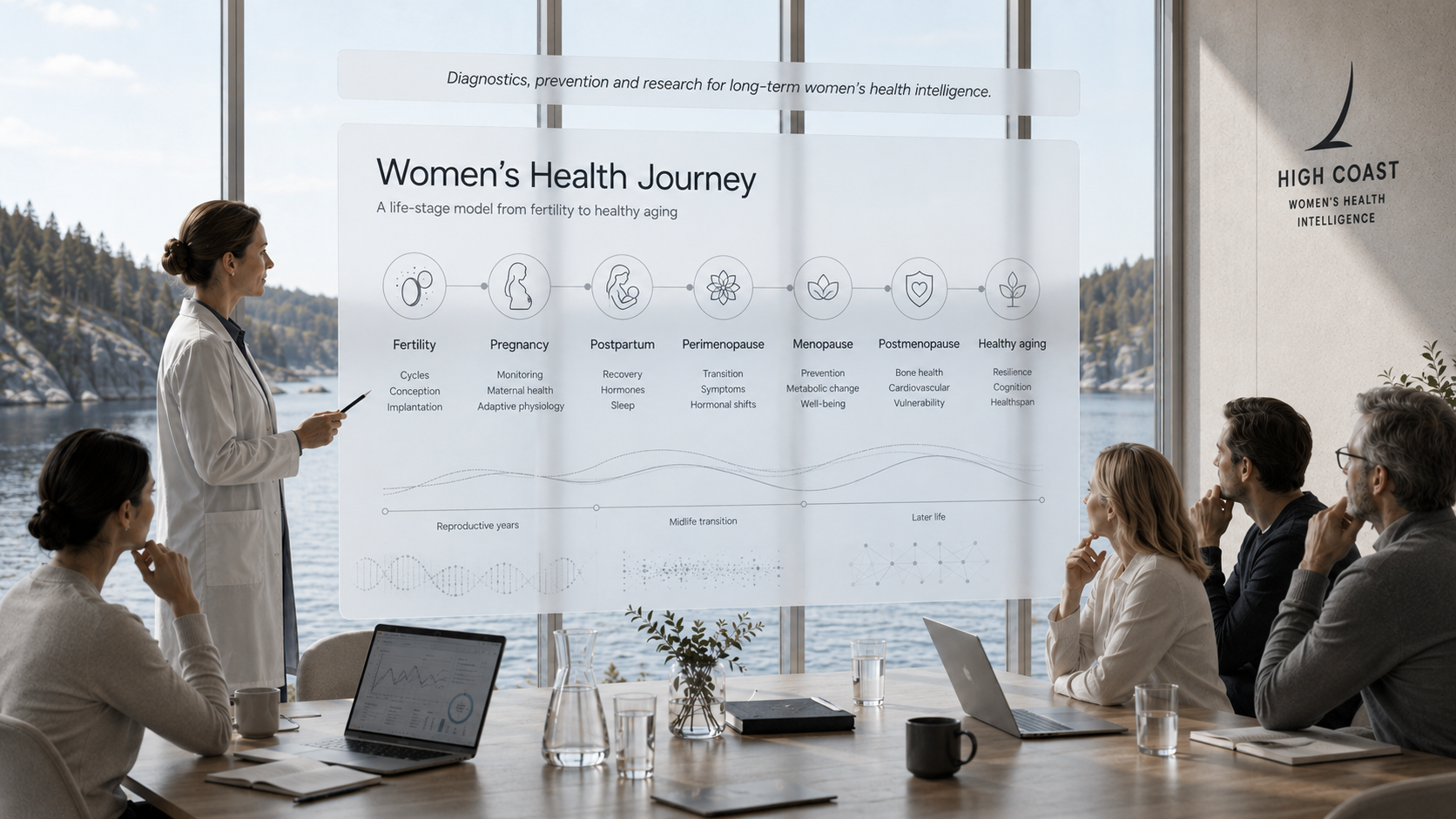
Women’s Health Journey
A life-stage model from fertility to healthy aging
Women’s health changes across time.
Fertility, pregnancy, postpartum recovery, perimenopause, menopause, postmenopause and healthy aging are often treated as separate clinical topics. In reality, they are connected parts of one biological journey.
A woman’s health history does not reset between life stages.
Cycle patterns, fertility history, pregnancy complications, postpartum recovery, inflammatory conditions, metabolic risk, thyroid function, hormone exposure, menopause timing, bone health, cardiovascular markers and cognitive symptoms may all carry information across time.
High Coast Women’s Health Intelligence uses a life-stage model to understand women’s health as a continuum.
The purpose is to connect symptoms, biomarkers, diagnostics, prevention and research across the full female life course.
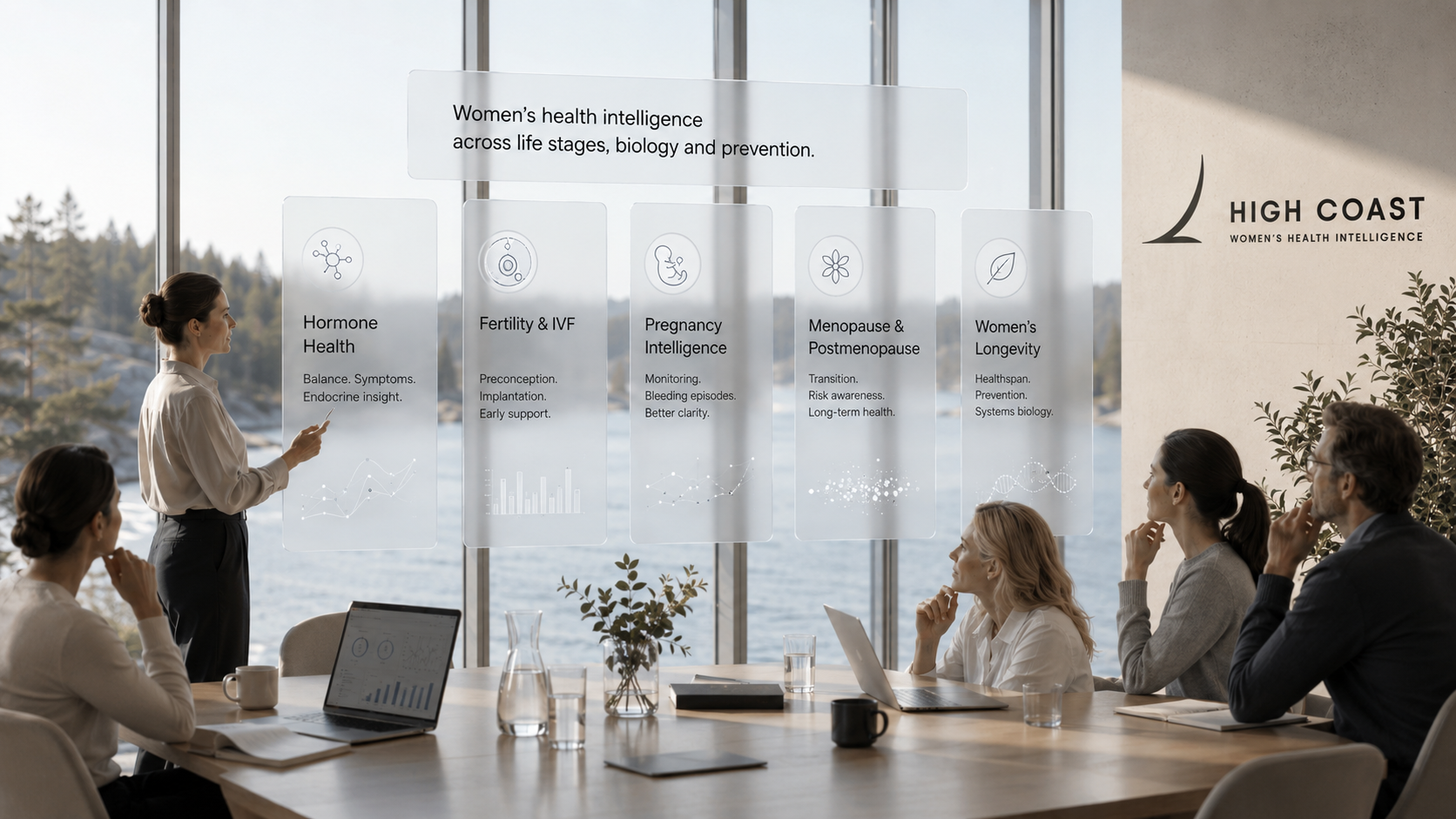
Why a life-stage model matters
Many women experience fragmented care because each health stage is handled separately.
Fertility may be assessed without enough connection to metabolic health.
Pregnancy may be followed without considering earlier reproductive or inflammatory history.
Postpartum recovery may be treated as temporary, even when symptoms persist.
Perimenopause may be missed because symptoms are interpreted separately.
Menopause may be reduced to hot flashes, even though it affects long-term cardiovascular, bone, metabolic and cognitive health.
Healthy aging may be discussed without considering reproductive and hormonal history.
A life-stage model helps organize these connections.
It asks:
What stage is this woman in now?
What earlier events may still matter?
What biological systems are changing?
What should be measured?
What should be followed over time?
What is prevention relevant to this stage?
What needs clinical review?
Women’s health intelligence begins when the timeline is visible.
Fertility
Fertility is not only about the ability to become pregnant.
It is also a window into reproductive, endocrine, metabolic and inflammatory health.
Fertility assessment may involve ovarian reserve, ovulation, cycle patterns, thyroid function, metabolic markers, uterine environment, partner factors, IVF history, endometriosis, previous miscarriage and general health.
In the life-stage model, fertility is connected to:
- menstrual cycle patterns
- ovarian reserve
- hormone signaling
- thyroid function
- metabolic health
- inflammation
- endometrial and uterine context
- IVF response
- previous reproductive outcomes
- early pregnancy vulnerability
A fertility question may therefore reveal information relevant not only to conception, but also to later pregnancy, menopause and long-term prevention.
Pregnancy
Pregnancy is a dynamic biological state.
It involves hormonal change, placental development, immune adaptation, vascular remodeling, metabolic adjustment and maternal-fetal signaling. It can also reveal underlying health patterns that may become important later in life.
Pregnancy history may provide clues about future cardiovascular, metabolic or inflammatory risk, especially when complications occur.
In the life-stage model, pregnancy intelligence includes:
- pregnancy monitoring
- bleeding and hematoma context
- IVF and previous miscarriage history
- placental development
- blood pressure and glucose regulation
- thyroid and iron status
- symptoms and trigger events
- ultrasound timing
- clinical escalation where needed
Pregnancy should not be understood only as a temporary event. It can be an important biological stress test and a window into long-term health.
Postpartum
Postpartum recovery is often underestimated.
After birth, the body undergoes major hormonal, immune, metabolic, vascular, musculoskeletal, psychological and sleep-related changes. Recovery may be affected by pregnancy complications, delivery experience, breastfeeding, blood loss, iron status, thyroid function, pelvic floor injury, infection, mood symptoms, sleep deprivation and social support.
Postpartum health may include:
- fatigue and recovery
- bleeding and anemia
- thyroid changes
- mood and anxiety symptoms
- lactation and hormonal state
- pelvic floor and musculoskeletal recovery
- metabolic follow-up after gestational diabetes
- blood pressure follow-up after hypertensive disorders
- sleep and cognitive load
- inflammatory or autoimmune changes
Postpartum should not be treated as a short aftercare period only.
It is a transition that may influence long-term physical, metabolic and mental health.
Perimenopause
Perimenopause is the transition before menopause, when ovarian function becomes more variable.
This stage may last for years and can be difficult to recognize because symptoms often overlap with stress, thyroid dysfunction, anemia, sleep problems, mood disorders, metabolic change and ordinary life pressure.
Common perimenopausal signals may include:
- irregular cycles
- heavier or lighter bleeding
- shorter or longer cycles
- hot flashes or night sweats
- sleep disturbance
- mood changes
- brain fog
- fatigue
- weight and body composition changes
- worsening premenstrual symptoms
- headaches
- joint pain
- libido changes
In the life-stage model, perimenopause is a key prevention window.
It is often the stage where symptoms, hormone transition, metabolic change, cardiovascular risk and long-term health planning begin to intersect more clearly.
Menopause
Menopause is defined by the final menstrual period, but its health relevance extends far beyond the end of cycles.
The decline in ovarian hormone production may affect thermoregulation, sleep, mood, urogenital tissue, bone remodeling, cardiovascular risk, lipid metabolism, insulin sensitivity, body composition, skin, joints and cognition.
Menopause care should therefore include more than symptom control.
A structured menopause model may consider:
- symptoms and quality of life
- bleeding history
- thyroid and iron status where relevant
- metabolic markers
- blood pressure
- lipids and cardiovascular risk
- bone health
- body composition
- sleep and cognitive symptoms
- HRT education where appropriate
- individualized clinical risk assessment
Menopause is both a hormonal transition and a prevention moment.
Postmenopause
Postmenopause is a long life stage.
After menopause, the focus gradually shifts from cycle-related changes toward long-term prevention, function and resilience.
Important postmenopausal health areas include:
- cardiovascular prevention
- metabolic health
- bone density and fracture risk
- muscle strength
- cognitive health
- urogenital health
- skin and connective tissue
- inflammation
- sleep and recovery
- body composition
- healthy aging
Postmenopausal health should not be passive.
It should be followed through measurable markers, symptoms, function, clinical context and prevention planning.
This is where women’s health intelligence connects directly with longevity.
Healthy aging
Healthy aging means preserving function, independence, cognition, mobility, vascular health, metabolic resilience, bone strength and quality of life over time.
For women, healthy aging is shaped by earlier life-stage signals.
Reproductive history, pregnancy complications, menopause timing, hormone exposure, inflammatory conditions, thyroid disease, metabolic patterns, body composition, family history and lifestyle can all influence long-term health.
A serious healthy-aging framework may include:
- metabolic and cardiovascular prevention
- muscle and bone health
- cognitive health
- inflammation
- mitochondrial and vascular resilience
- sleep and recovery
- body composition
- biological age where scientifically appropriate
- symptom and biomarker trends
- clinical review when needed
Healthy aging should not be presented as anti-ageing marketing.
It should be understood as prevention, function and measurable biology across time.
A connected timeline
The life-stage model is not a straight line where one stage disappears when the next begins.
Earlier health patterns can echo later.
A history of irregular cycles may connect to metabolic or endocrine patterns.
Endometriosis may influence fertility, pain, inflammation and pregnancy concerns.
Pregnancy complications may inform later cardiovascular or metabolic prevention.
Postpartum thyroid changes may reveal autoimmune tendency.
Perimenopause may expose metabolic vulnerability.
Menopause may accelerate changes in bone, vascular and metabolic health.
Postmenopause may reveal the long-term consequences of earlier risk patterns.
High Coast Women’s Health Intelligence uses the timeline to make these connections visible.
Diagnostics across the journey
Diagnostics should change with life stage.
A fertility panel is not the same as a pregnancy monitoring pathway.
A postpartum recovery assessment is not the same as a menopause panel.
A postmenopausal prevention assessment is not the same as a biological age framework.
Each stage requires different questions.
Diagnostics may include:
- biomarkers
- symptom tracking
- cycle timing
- pregnancy timeline
- imaging context
- blood pressure
- metabolic markers
- thyroid markers
- inflammation markers
- micronutrients
- body composition
- bone density where indicated
- cognitive and functional markers
The principle remains the same:
Measure what matters for the stage, the symptoms and the decision.
AI-supported life-stage interpretation
Women’s health data becomes more meaningful when it is organized across time.
AI-supported interpretation may help connect:
- symptoms
- biomarkers
- cycle history
- fertility history
- pregnancy and postpartum events
- menopause transition
- metabolic trends
- cardiovascular markers
- bone and cognitive risk
- clinical notes
- follow-up plans
AI should not replace clinical judgment. It should help structure complex timelines, identify patterns, prepare reports and support better questions for clinical review.
The purpose is clarity and continuity.
Research value of the women’s health journey
A life-stage model is also important for research.
Many women’s health questions cannot be answered well if data is separated into isolated episodes.
Longitudinal, structured information may help researchers better understand:
- how fertility history relates to later health
- how pregnancy complications predict future risk
- how perimenopause affects metabolic trajectory
- how menopause timing relates to bone, cardiovascular and cognitive outcomes
- how inflammation and tissue-state biology influence reproductive and long-term health
- how AI can support safe, evidence-based interpretation over time
High Coast Women’s Health Intelligence is designed to support this kind of responsible learning.
From life stages to women’s health intelligence
The women’s health journey becomes useful when each stage is connected to the next.
Fertility provides reproductive context.
Pregnancy reveals biological adaptation.
Postpartum shows recovery and resilience.
Perimenopause signals transition.
Menopause opens a prevention window.
Postmenopause focuses long-term risk.
Healthy aging centers function and healthspan.
High Coast Women’s Health Intelligence moves information through a life-stage pathway:
fertility → pregnancy → postpartum → perimenopause → menopause → postmenopause → healthy aging
The core principle is simple:
Women’s health should not be interpreted as isolated events. It should be understood as a connected biological journey across time.