Health Programs
Long-term frameworks for hormones, fertility, menopause and longevity
Women’s health often changes gradually.
Symptoms may appear before a diagnosis is clear. Biomarkers may shift before disease is established. Fertility questions may overlap with hormones, thyroid function, inflammation and metabolic health. Menopause may begin as symptoms, but later become a long-term prevention issue involving cardiovascular, bone, metabolic and cognitive health.
High Coast Women’s Health Intelligence develops health programs to create more structured pathways through these changes.
Our health programs combine diagnostics, symptoms, life-stage context, interpretation and follow-up. The purpose is not to offer isolated tests or generic advice. The purpose is to build frameworks that help women understand what is changing, what can be measured, what should be followed and when clinical review may be needed.
Health programs are designed for long-term clarity.

Why health programs matter
Many women’s health concerns do not fit into one short consultation or one laboratory result.
A woman may have fatigue, irregular cycles, fertility concerns, pregnancy anxiety after previous loss, perimenopausal symptoms, metabolic change or long-term prevention goals. These questions often involve several biological systems at once.
A structured program helps organize the process.
It can define:
- what question the program is designed to answer
- what symptoms should be mapped
- what biomarkers may be relevant
- what life stage matters
- what risks should be followed
- what information needs clinical review
- what follow-up should look like
The goal is to move from scattered health information to a more coherent pathway.
Hormone Balance Program
The Hormone Balance Program is designed for women with symptoms or concerns that may involve endocrine patterns.
This may include cycle-related symptoms, irregular periods, suspected ovulation problems, perimenopausal changes, androgen-related symptoms, thyroid-related symptoms, fatigue or symptoms that appear to change with hormonal timing.
The phrase “hormone balance” must be used carefully. Women’s hormone biology is dynamic, not static. Estrogen, progesterone, thyroid hormones, cortisol, insulin and androgens interact with cycle phase, life stage, sleep, stress physiology, metabolism, inflammation and medication use.
A Hormone Balance Program may include:
- symptom and cycle mapping
- hormone testing where relevant
- thyroid markers
- metabolic markers
- inflammation context
- medication and hormone exposure review
- interpretation of patterns over time
- follow-up recommendations
- clinical review where needed
The goal is not to reduce symptoms to one hormone explanation. The goal is to understand endocrine patterns in context.
Fertility Preparation Program
The Fertility Preparation Program supports women who are planning pregnancy, preparing for IVF or seeking a more structured understanding of reproductive health before conception.
Fertility preparation is not only about ovarian reserve. It may involve ovulation, cycle timing, thyroid function, metabolic health, inflammation, micronutrient status, uterine context, previous pregnancy history, partner factors and lifestyle factors.
A Fertility Preparation Program may include:
- reproductive and menstrual history
- ovarian reserve context
- ovulation and cycle assessment
- thyroid markers
- metabolic markers
- micronutrient status
- inflammation context where relevant
- previous miscarriage or IVF history
- preparation for clinical fertility consultation
- follow-up and next-step planning
The purpose is not to guarantee pregnancy. No program can do that.
The purpose is to identify relevant signals, clarify modifiable factors and support more informed reproductive decisions.
Pregnancy Intelligence Program
The Pregnancy Intelligence Program is designed for structured monitoring, interpretation and follow-up during pregnancy, especially when additional context is needed.
This may be relevant after IVF, previous miscarriage, bleeding episodes, hematoma findings, endometriosis, complex reproductive history, maternal risk factors or anxiety after previous loss.
Pregnancy is a dynamic biological process. Symptoms, blood tests, ultrasound findings and risk signals change with gestational age.
A Pregnancy Intelligence Program may include:
- pregnancy timeline organization
- IVF and embryo transfer context where relevant
- previous miscarriage history
- bleeding and symptom tracking
- hCG or progesterone interpretation where clinically used
- blood tests and pregnancy markers
- ultrasound timing and findings
- trigger-event documentation
- escalation guidance where needed
- structured summaries for clinical discussion
The program does not replace maternity care, emergency assessment or obstetric expertise. Its purpose is to organize information, support interpretation and help clarify when clinical review is needed.
Menopause Intelligence Program
The Menopause Intelligence Program supports women during perimenopause and menopause, when symptoms, hormones, metabolism and long-term risk begin to intersect.
Menopause should not be reduced to hot flashes alone. The transition may involve sleep, mood, cognition, body composition, metabolic health, cardiovascular risk, bone health, thyroid overlap, urogenital symptoms and quality of life.
A Menopause Intelligence Program may include:
- symptom mapping
- menstrual and bleeding history
- life-stage assessment
- thyroid and iron status where relevant
- metabolic markers
- cardiovascular risk markers
- inflammation context
- bone-health considerations
- HRT education and clinical discussion preparation
- follow-up over time
The goal is to treat menopause as both a symptom transition and a prevention window.
This program supports informed decisions, not one-size-fits-all recommendations.
Postmenopause Health Program
The Postmenopause Health Program focuses on long-term prevention after menopause.
Postmenopause is a long life stage where health priorities often shift toward cardiovascular prevention, metabolic resilience, bone health, muscle strength, cognitive health, inflammation, body composition and healthy aging.
A Postmenopause Health Program may include:
- cardiovascular risk assessment
- blood pressure and lipid markers
- glucose and insulin-related markers
- thyroid function
- bone-health context
- vitamin D and micronutrient status
- inflammation markers where relevant
- body composition
- muscle and functional health
- cognitive and sleep context
- follow-up planning
The purpose is to identify risk patterns early and support prevention before disease becomes advanced.
Postmenopausal bleeding, significant symptoms or abnormal results should always be reviewed through appropriate clinical care.
Women’s Longevity Program
The Women’s Longevity Program is focused on healthspan, not anti-ageing marketing.
Healthspan means preserving function, resilience, cognition, metabolic health, vascular health, muscle strength, bone health and quality of life over time.
Women’s longevity should be interpreted through female biology: reproductive history, pregnancy history, menopause timing, hormonal transition, autoimmune patterns, bone health, cardiovascular risk and metabolic change.
A Women’s Longevity Program may include:
- metabolic and cardiovascular markers
- inflammation context
- thyroid function
- liver and kidney markers
- micronutrient status
- body composition
- muscle strength and functional health
- cognitive and sleep context
- menopause and reproductive history
- biological age markers where scientifically appropriate
- long-term follow-up planning
The goal is not to promise longer life.
The goal is to support measurable prevention and preserve long-term biological function.
How health programs are structured
Each health program follows the same general logic:
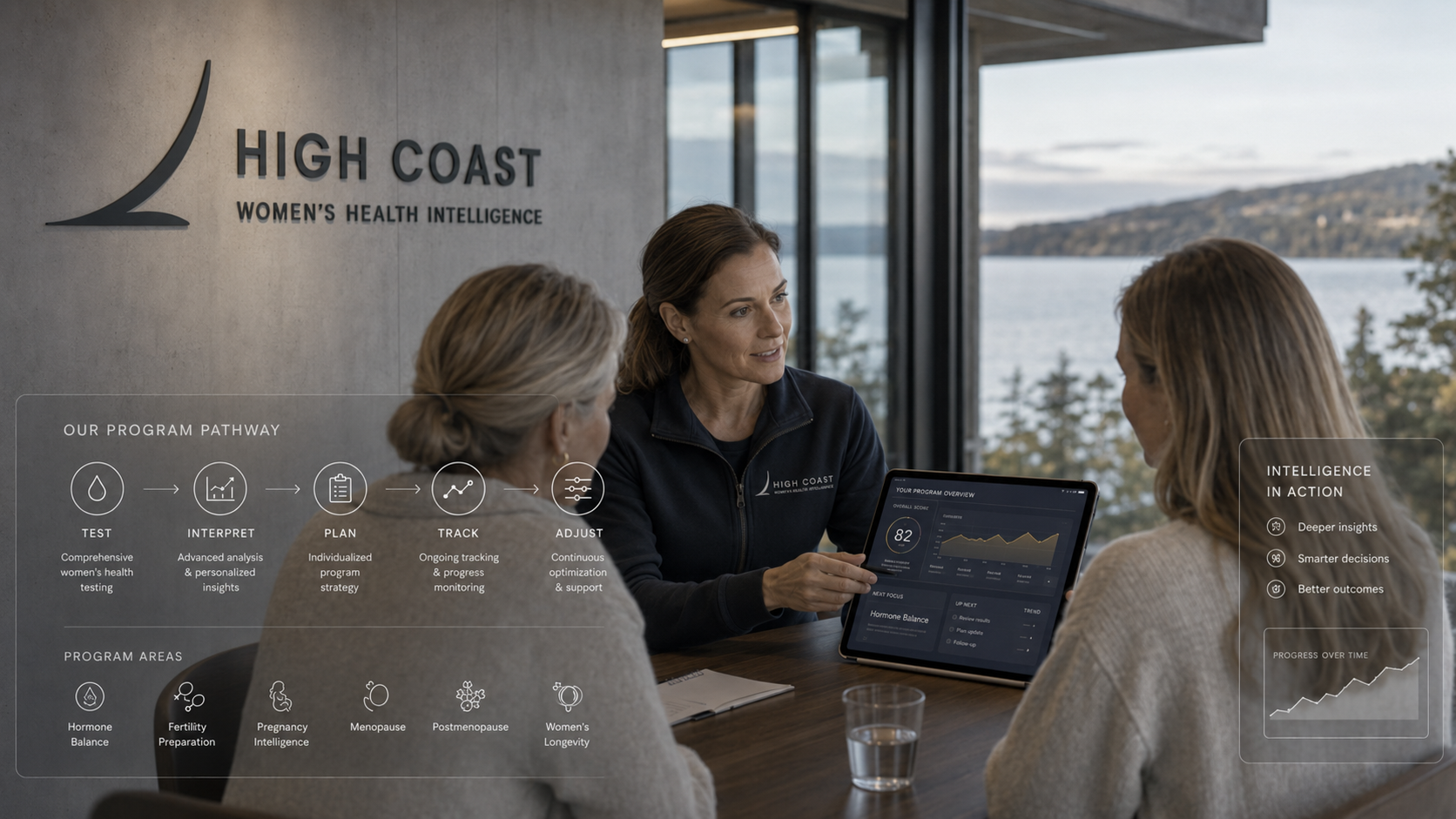
history → symptoms → diagnostics → interpretation → plan → follow-up
The details vary depending on the program.
A fertility program may focus on cycle timing, ovarian reserve and preconception biology.
A pregnancy program may focus on timelines, symptoms, biomarkers and escalation points.
A menopause program may focus on symptoms, metabolic change, cardiovascular risk and treatment discussion.
A longevity program may focus on long-term biomarkers, function and prevention.
The shared principle is that health information becomes more useful when it is structured over time.
AI-supported program interpretation
AI can support health programs by organizing complex information.
It may help summarize symptoms, compare biomarkers, identify trends, structure reports, prepare clinical questions and support follow-up planning.
But AI should not replace clinical judgment.
A responsible program model must clearly separate:
- education
- interpretation
- prevention support
- decision support
- medical diagnosis
- urgent care
- research hypotheses
High Coast Women’s Health Intelligence uses AI as a structure and interpretation layer, not as an automatic medical decision-maker.
Clinical safety and escalation
Some findings require clinical review.
This may include abnormal blood results, suspected thyroid disease, pregnancy warning symptoms, heavy bleeding, postmenopausal bleeding, severe pain, significant metabolic risk, cardiovascular warning signs, severe mental health symptoms, fertility concerns requiring specialist care or rapidly worsening symptoms.
Health programs must therefore include escalation pathways.
A safe program should help identify:
- what can be monitored
- what should be repeated
- what can be addressed through prevention
- what needs medical review
- what may require urgent assessment
Clinical safety is not an add-on. It is part of the program design.
The core principle
High Coast Women’s Health Intelligence health programs are built to transform women’s health information into structured pathways.
Not isolated tests.
Not generic wellness plans.
Not vague lifestyle advice.
Not AI without clinical boundaries.
A health program should connect biology, symptoms, life stage, diagnostics, interpretation and follow-up.
The core principle is simple:
Test with purpose. Interpret in context. Plan responsibly. Follow over time. Adjust when needed.