Diagnostics & Data
Biomarker-based insight for individualized women’s health decisions
Diagnostics are central to High Coast Women’s Health Intelligence.
But diagnostics are not only about measuring values.
A hormone result, thyroid marker, fertility marker, inflammation marker, metabolic test, pregnancy blood test or symptom report becomes useful when it is interpreted in the right biological and clinical context.
What is changing?
What is normal for this life stage?
What is expected for this cycle phase?
What may need follow-up?
What should be reviewed by a clinician?
What decision can this information support?
This is the purpose of the diagnostics platform.
To move from isolated test results to structured women’s health intelligence.

Measure what matters in women’s health
Women’s health diagnostics can easily become fragmented.
One test may be ordered for fatigue.
Another for irregular bleeding.
Another for fertility.
Another for pregnancy monitoring.
Another for menopause symptoms.
Another for metabolic risk.
Each result may be clinically useful, but the deeper value often comes from connecting the results.
High Coast Women’s Health Intelligence is built around the principle:
measure what matters, interpret it in context.
In women’s health, context is especially important. Hormone values may depend on cycle phase, age, medication use, pregnancy status, menopause transition, thyroid function, metabolic health, inflammation and symptoms.
A result should not be interpreted as an isolated number.
It should be part of a biological pathway.
Health testing
Health testing provides structured measurement of key biological systems.
The purpose is not to test everything. The purpose is to select markers that help clarify symptoms, risk, trends or decisions.
Important testing areas may include:
- hormone markers
- thyroid markers
- inflammation markers
- metabolic markers
- micronutrients
- fertility markers
- pregnancy-related markers
- cardiovascular risk markers
- liver and kidney markers
- bone and postmenopausal health markers
Different women need different testing strategies depending on age, symptoms, reproductive goals, pregnancy history, medication use, menopause status and clinical risk.
Testing becomes most useful when it is connected to a meaningful question.
Hormone panels
Hormone testing can help explore endocrine patterns behind symptoms, cycle changes, fertility questions and menopausal transition.
But hormone interpretation requires caution.
A single hormone value may not explain a symptom on its own. Timing matters. Cycle phase matters. Medication matters. Pregnancy status matters. Age and ovarian function matter.
Hormone panels may support assessment of:
- estrogen and progesterone patterns
- ovulation and luteal-phase context
- irregular cycles
- perimenopause and menopause transition
- androgen-related symptoms
- fertility and IVF preparation
- symptoms potentially related to endocrine change
The goal is not to reduce women’s health to “hormone balance”. The goal is to understand endocrine signals as part of a wider clinical and biological system.
Thyroid markers
Thyroid function is important across women’s health.
It may influence energy, weight change, menstrual regularity, fertility, pregnancy, mood, metabolism and long-term cardiovascular risk. Thyroid dysfunction can also overlap symptomatically with perimenopause, fatigue syndromes, postpartum changes and metabolic disturbance.
A structured thyroid assessment may include markers such as TSH, free thyroid hormones and, where clinically relevant, thyroid antibodies.
In women’s health intelligence, thyroid markers should be interpreted together with symptoms, reproductive stage, pregnancy status, medication use, metabolic markers and clinical history.
Inflammation markers
Inflammation is not one disease and not one number.
Inflammatory signals may be relevant in metabolic health, endometriosis, pregnancy risk, autoimmune tendency, cardiovascular prevention, fatigue, tissue healing and long-term health.
Inflammation markers may help identify systemic patterns, but they rarely provide a full explanation alone. Some important inflammatory processes may be local, tissue-based or intermittent and may not be fully captured by standard blood tests.
This is why inflammation markers should be interpreted together with symptoms, imaging, cycle patterns, pregnancy history, metabolic risk and clinical context.
High Coast Women’s Health Intelligence is especially interested in how inflammatory patterns may connect reproductive health, pregnancy vulnerability, menopause transition and long-term prevention.
Metabolic markers
Metabolic health is a central part of women’s health.
Insulin resistance, glucose regulation, blood lipids, liver markers, body composition and cardiovascular risk can change across the life course. Puberty, pregnancy, postpartum life, perimenopause and menopause may all influence metabolic trajectory.
Metabolic diagnostics may support assessment of:
- fasting glucose and HbA1c
- insulin resistance patterns
- triglycerides and cholesterol markers
- ApoB and cardiovascular risk where relevant
- liver markers
- blood pressure and waist circumference
- body composition
- inflammation and metabolic risk interaction
This area is especially important in menopause and postmenopause, where hormonal transition may coincide with changes in abdominal fat, lipid patterns, insulin sensitivity and vascular risk.
The goal is prevention before disease becomes established.
Micronutrients
Micronutrient status can influence energy, blood formation, pregnancy preparation, fetal development, immune function, thyroid biology, bone health and recovery.
Commonly relevant areas include iron status, vitamin D, B12, folate and other nutrition-related markers depending on symptoms, diet, pregnancy plans, bleeding patterns and clinical history.
Micronutrient testing should not be used as a generic wellness checklist. It should be connected to symptoms, risk factors, life stage and medical relevance.
For example, heavy menstrual bleeding, fatigue, pregnancy planning, vegan diet, malabsorption risk, previous deficiency or postmenopausal bone health may all create different diagnostic questions.
Fertility markers
Fertility diagnostics are often focused on ovarian reserve and ovulation, but fertility is influenced by more than egg count alone.
Fertility-related testing may include ovarian reserve markers, ovulation-related hormones, thyroid markers, metabolic markers, inflammation context, micronutrient status and clinical history.
Markers such as AMH, FSH, LH, estradiol and progesterone may be useful when interpreted correctly. But they should not be used in isolation to define a woman’s reproductive potential.
High Coast Women’s Health Intelligence approaches fertility markers as part of a broader reproductive health picture:
- ovarian reserve
- ovulation
- luteal-phase support
- thyroid function
- metabolic health
- inflammation
- previous IVF response
- implantation and early pregnancy history
The aim is to support better preparation, clearer interpretation and more structured fertility decision-making.
Women’s panels
Women’s diagnostic panels are designed to organize testing around real clinical questions.
Instead of offering disconnected tests, panels can help structure assessment for specific life stages, symptoms or prevention goals.
Examples may include:
- fertility panel
- hormone balance panel
- menopause panel
- postmenopause panel
- energy and fatigue panel
- longevity panel for women
- metabolic health panel
- pregnancy monitoring panel
Each panel should have a clear purpose. A fertility panel should not be the same as a menopause panel. A fatigue panel should not be the same as a pregnancy monitoring panel. A longevity panel should not be a random collection of advanced markers.
A panel is useful when it helps answer a specific question and guides the next step.
Fertility panel
A fertility panel may support women who are planning pregnancy, preparing for IVF, evaluating cycle patterns or trying to understand previous reproductive difficulty.
It may include markers related to ovarian reserve, ovulation, thyroid function, metabolic health, inflammation and nutritional status.
The purpose is not to predict pregnancy with certainty. No panel can do that.
The purpose is to identify relevant signals, clarify modifiable factors, support clinical conversations and create a more structured preconception or fertility pathway.
Hormone balance panel
A hormone balance panel may be relevant when symptoms suggest endocrine involvement, such as cycle-related symptoms, irregular periods, suspected ovulation problems, perimenopausal changes, androgen-related symptoms or unexplained symptom patterns.
The phrase “hormone balance” should be used carefully.
Women’s hormone biology is dynamic, not static. Hormone levels change across the menstrual cycle, pregnancy, postpartum life, perimenopause and menopause.
The purpose of a hormone balance panel is therefore not to chase a perfect number. It is to understand whether endocrine patterns may help explain symptoms or guide follow-up.
Menopause panel
A menopause panel may support women during perimenopause or menopause transition.
This may include hormonal markers where relevant, but also metabolic, thyroid, inflammation and cardiovascular markers. Symptoms alone do not always show the full biological picture.
A menopause-focused assessment may help clarify:
- transition stage
- symptom context
- thyroid overlap
- metabolic changes
- cardiovascular risk
- bone-health considerations
- inflammation and lifestyle-related risk
- whether clinical review is needed
The goal is to support informed care, prevention and individualized discussion.
Postmenopause panel
Postmenopause is an important preventive health window.
After menopause, attention often shifts from cycle symptoms to long-term risk: cardiovascular disease, metabolic health, bone health, cognitive health, inflammation, body composition and healthy ageing.
A postmenopause panel may include metabolic markers, lipid markers, inflammation markers, vitamin D, thyroid markers, liver and kidney function, glucose regulation and other clinically relevant tests.
The purpose is to identify risk patterns early and support long-term health planning.
Energy and fatigue panel
Fatigue is common, but it is not one diagnosis.
Energy problems may involve sleep, iron status, thyroid function, inflammation, glucose regulation, stress physiology, perimenopause, pregnancy, postpartum recovery, medication effects, nutritional deficiency or chronic disease.
An energy and fatigue panel should therefore be interpreted carefully.
The purpose is to look for relevant biological contributors while recognizing that fatigue often requires both medical assessment and broader contextual understanding.
Testing may help identify what should be corrected, what should be monitored and what requires clinical review.
Longevity panel for women
A women’s longevity panel should be grounded in prevention, not anti-ageing marketing.
The focus is healthspan: maintaining metabolic resilience, vascular health, muscle function, cognitive health, bone health, inflammatory balance and organ function over time.
A longevity panel for women may include markers related to:
- metabolic health
- cardiovascular risk
- inflammation
- liver and kidney function
- thyroid function
- micronutrient status
- hormonal life-stage context
- biological age where scientifically appropriate
The purpose is not to promise longer life. The purpose is to identify patterns that may support prevention, follow-up and long-term health strategy.
Interpretation
Testing is only the first step.
A result becomes valuable when it is interpreted in context.
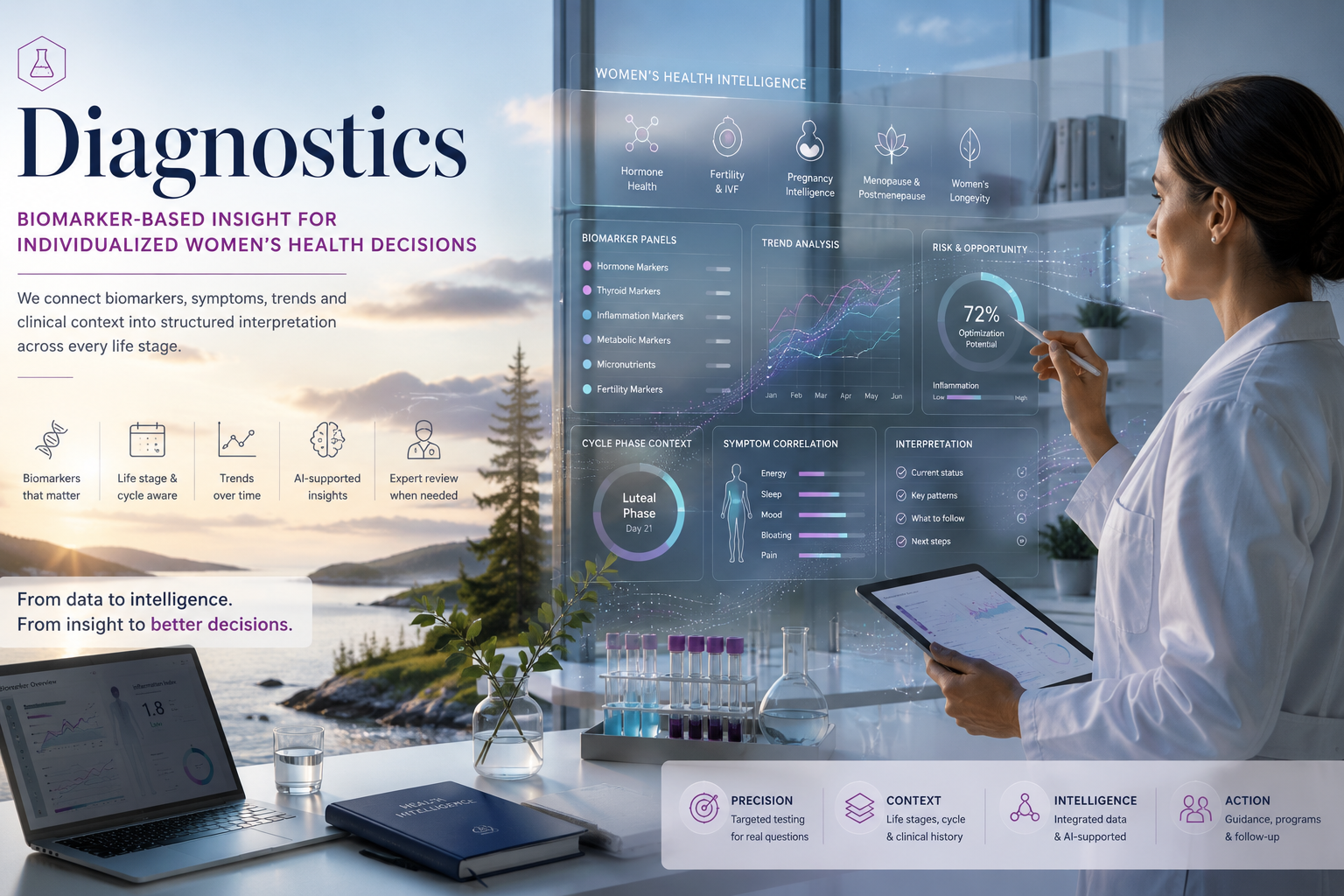
High Coast Women’s Health Intelligence focuses on structured interpretation of biomarkers, symptoms and trends. This means asking not only whether a result is inside or outside a reference interval, but what it may mean for the woman’s current question.
Interpretation may include:
- biomarker interpretation
- symptom correlation
- trend analysis
- personalized reports
- AI-supported insights
- clinical review where needed
This approach is especially important in women’s health, where timing, life stage and biological context may change the meaning of a result.
Biomarker interpretation
Biomarker interpretation connects test results to clinical meaning.
A biomarker may be normal, abnormal, borderline, changing over time or normal in the laboratory sense but still relevant in context.
For example, the interpretation of a hormone marker may depend on cycle day. A thyroid marker may matter differently in pregnancy planning. A metabolic marker may become more important during menopause transition. An inflammation marker may need to be interpreted alongside symptoms, imaging and risk history.
The goal is not to overinterpret every value.
The goal is to identify what matters.
Symptom correlation
Symptoms provide essential context.
Bleeding changes, fatigue, pelvic pain, cycle-related symptoms, sleep disturbance, weight change, mood symptoms, hot flashes, pregnancy symptoms or postmenopausal symptoms may all change how diagnostic data should be understood.
Symptom correlation means connecting what a woman experiences with measurable biological signals.
This does not mean that every symptom has a simple biomarker explanation. Many do not.
But structured symptom data can help identify patterns, timing, triggers, severity, progression and the need for follow-up.
Trend analysis
Many biological changes are more meaningful over time than in a single snapshot.
Trend analysis may show whether a marker is stable, improving, worsening, fluctuating or changing in relation to symptoms, cycle phase, pregnancy stage, medication, lifestyle intervention or treatment.
This is important in areas such as:
- pregnancy monitoring
- metabolic health
- menopause transition
- thyroid follow-up
- inflammation
- fertility treatment
- preventive health programs
A single result asks: where are we now?
A trend asks: what is changing?
Personalized reports
Personalized reports should make diagnostic information understandable without oversimplifying it.
A good report should explain:
- what was measured
- why it matters
- what the result may suggest
- what is uncertain
- what should be followed
- when clinical review may be needed
- what next step may be reasonable
The goal is clarity, not alarm.
Reports should support informed decisions and better conversations with clinicians.
AI-supported insights
AI can help structure complex information.
It may support pattern recognition, trend summaries, symptom correlation, report generation and prioritization of findings that may need human review.
But AI-supported insight is not the same as diagnosis.
High Coast Women’s Health Intelligence uses AI as a support layer for organization and interpretation. Medical responsibility remains connected to qualified human expertise when needed.
The purpose is to make complex data more usable, not to replace clinical judgment.
Clinical review where needed
Some findings require human review.
This may include clearly abnormal results, pregnancy-related concerns, symptoms suggesting urgent evaluation, complex hormone patterns, suspected thyroid disease, significant metabolic risk, unexplained bleeding, severe symptoms or results that require treatment decisions.
The diagnostics platform should help identify when self-guided interpretation is not enough.
Responsible diagnostics must include pathways for escalation, clinical review, referral or follow-up.
This is how testing becomes safer and more useful.
From diagnostic data to women’s health intelligence
Diagnostics should lead somewhere.
A test result may lead to reassurance, repeat testing, a lifestyle intervention, clinical review, treatment discussion, pregnancy follow-up, fertility planning, menopause assessment, preventive program entry or research learning.
High Coast Women’s Health Intelligence moves diagnostics through a structured pathway:
measurement → context → interpretation → prioritization → guidance → follow-up → learning
This is how biomarker data becomes health intelligence.
The core principle is simple:
Measure what matters. Interpret it in context. Support the right decision. Learn over time.